 Robert Andrison
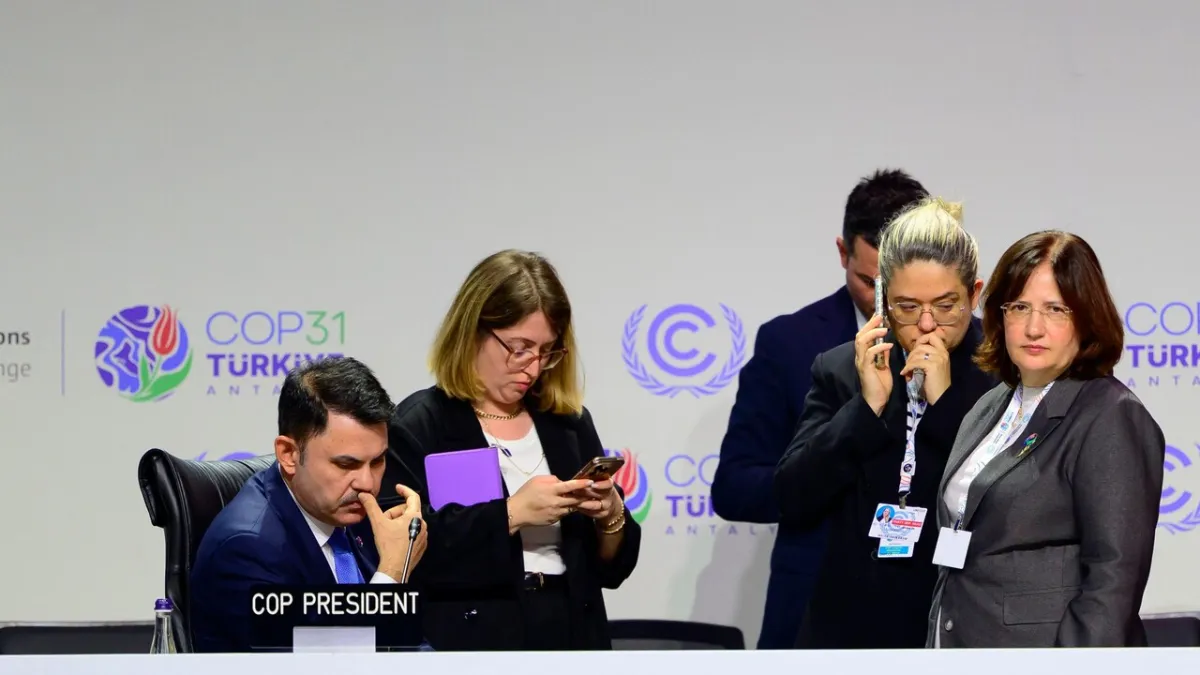
DUBAI – The European Union has definitively rejected a key draft on climate decisions proposed by the Turkish presidency at the Conference of the Parties (COP31) in 2026. The official announcement by Murat Kurum confirmed that the crucial 'Cover Decision' was not adopted, highlighting deep divisions among member states regarding fossil fuels and ambitious climate targets.
This dramatic decision came after a draft text was circulated overnight before Europe's rejection became clear. The document, initiated by the Turkish presidency, failed to meet the expectations of the European bloc, which sought stronger commitments to emission reductions and a clean energy transition.
Murat Kurum, who is part of the COP31 presidency, announced the deadlock. The 'Cover Decision' represents the summary of key political agreements reached at each COP, encompassing vital pledges to address climate change. Its failure to be adopted indicates a wide chasm between negotiators.
Key points of contention centered on the future of fossil fuels. The European Union and several other developed nations have consistently pushed for the draft to include strong language on the phase-out or rapid phase-down of fossil fuels. However, the Turkish draft reportedly did not reflect these ambitions, provoking anger among European delegates.
Furthermore, climate targets and global temperature limits also became areas of dispute. Europe argues that any decision must align with the goal of keeping global temperature rise below 1.5 degrees Celsius, as stipulated in the Paris Agreement. The Turkish draft was deemed insufficiently aggressive in achieving this critical target, potentially jeopardizing collective global efforts.
For a deeper analysis of these tensions, also read: COP31 Heats Up: Turkey Forces Controversial Climate Draft, European Union Rejects!
This rejection is not unprecedented in the history of global climate negotiations. Conflicts of interest between fossil fuel producing and consuming nations, as well as differing levels of development, often hinder progress. However, the European Union's assertiveness this time demonstrates a limit to patience with compromises perceived as diluting climate ambition.
The implications of this draft's rejection are significant. Without an agreed 'Cover Decision,' the direction of global climate policy post-COP31 will remain unclear. This could send negative signals to markets, investors, and the global community about the seriousness of the international community in addressing the escalating climate crisis.
Turkey's presidency now faces the arduous task of bridging differences or revising the draft to gain majority acceptance. Intense negotiations are expected to continue until the final moments of the conference, with significant pressure to reach a credible and effective agreement.
Many developing countries also voiced their concerns. While they support climate ambition, they also demand greater financial and technological support from developed nations for their energy transitions. This draft conflict reflects the complexity and interconnectedness of climate justice and emission reduction ambitions.
Failure to reach a strong consensus at COP31 will slow down much-needed mitigation and adaptation efforts worldwide. Climate scientists have repeatedly warned that the window of opportunity to prevent the worst impacts of climate change is narrowing, making each climate conference a crucial moment that cannot be wasted.
Editorial Insight: The European Union's rejection of the Turkish presidency's draft at COP31 is a clear indication that fundamental divisions over energy transition and climate ambition remain unresolved. This situation highlights the need for stronger leadership and constructive compromises to overcome conflicting interests. Without a bold agreement, the global momentum to combat climate change risks stalling, exacerbating the challenges already at hand.