 Robert Andrison
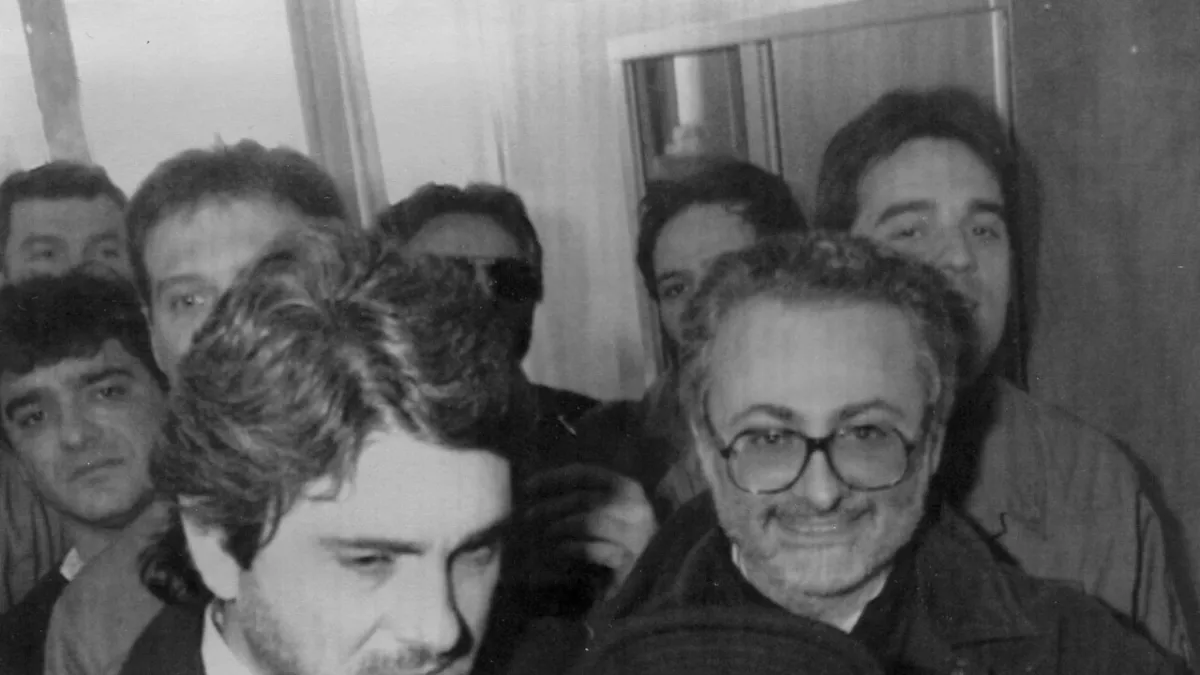
ROME – Dino De Megni, father of Augusto De Megni, recently revisited the crucial moment of his son's liberation from kidnapping in 1990. He highlighted the special role played by former Italian Police Chief, Gianni De Gennaro, alongside the then-Police Chief, Antonio Manganelli. According to Dino, De Gennaro employed a unique approach that fostered deep trust, even through unspoken communication, a key element contributing to Augusto's safe return.
This story re-emerges as a poignant reminder of the formidable challenges Italian law enforcement faced against organized crime during that era. Dino De Megni explicitly stated, 'He and Manganelli were there when Augusto was freed,' underscoring the direct presence and involvement of two of Italy's most influential police figures at the time.
The abduction of Augusto De Megni, which occurred in Perugia on October 3, 1990, sent shockwaves across the Italian public. This case became one of the most dramatic episodes in the country's history of kidnappings, frequently involving criminal syndicates with extensive networks. The De Megni family endured immense psychological pressure and threats throughout Augusto's captivity.
De Gennaro, who later served as National Police Chief and also Director of the Security Information Department (DIS), is renowned for his distinguished career in combating organized crime and terrorism. His ability to build connections and trust, even in the most tense situations, was often cited as one of his greatest assets. Dino De Megni's acknowledgment adds a personal dimension to his professional reputation.
The phenomenon of 'trust without words' mentioned by Dino De Megni refers to De Gennaro's capacity to manage crisis situations with exceptional wisdom and sensitivity. In the context of hostage liberation negotiations, discretion and the ability to interpret behind-the-scenes dynamics are often more effective than overtly demonstrative interventions. This illustrates De Gennaro's strategic maturity in dealing with kidnappers.
Antonio Manganelli's role, as both a colleague and leader at the time, should also not be underestimated. Like De Gennaro, Manganelli was a highly respected figure within Italian law enforcement, known for his firmness and integrity. The presence of these two personalities offered reassurance and hope to a family plunged into despair.
Augusto De Megni's safe liberation on November 20, 1990, after more than 40 days in captivity, was the result of intensive collaborative efforts by various parties, with meticulous coordination under the leadership of De Gennaro and Manganelli. This event stands as a tangible testament to the effectiveness of an approach that combines rigorous law enforcement with clandestine diplomacy.
Dino De Megni's rekindled recollection in 2026 also reminds the public of De Gennaro's enduring legacy, which remains relevant today. De Gennaro's career itself has not been without scrutiny, including public interest cases. For instance, investigations concerning the sealing of De Gennaro's home in Maremma, reveal the complexity of his public and law enforcement career.
This narrative by Dino De Megni is more than just a personal flashback; it is also a valuable lesson in crisis leadership and the dynamics of trust. In the context of hostage rescue operations, the psychological dimension and non-verbal communication often play a vital role that cannot be replicated by tactics alone.
For the De Megni family, the bitter memory of Augusto's kidnapping will always remain etched, yet it is also enveloped in gratitude for the successful liberation operation. Dino De Megni's testimony underscores that behind every major operation, there is an invaluable human touch and personal approach.
Editorial Insight: Dino De Megni's acknowledgment of De Gennaro and Manganelli's roles in his son's liberation highlights the importance of adaptive and humane leadership qualities in extreme crisis management. The concept of 'unspoken trust' alluded to by De Megni emphasizes that in critical situations, a deep understanding of interpersonal dynamics and the ability to build empathetic relationships can be far more effective than purely repressive actions. This provides a new perspective on how law enforcement effectiveness is measured, not solely by operational strength, but also by the wisdom and individual sensitivity of its leaders. This story remains particularly relevant amidst ongoing debates about the best approaches to combating global organized crime and terrorism in 2026.