 Angela Stefani
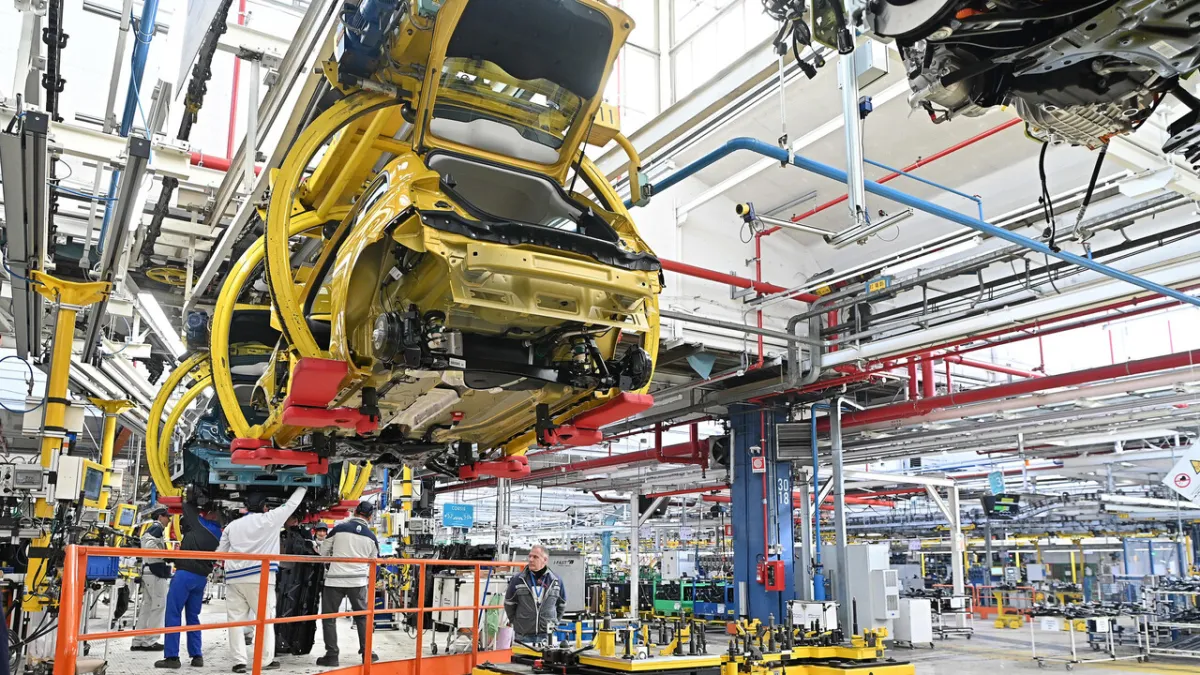
Turin – The Italian automotive industry faces another significant challenge as Stellantis, the manufacturing giant, announced temporary layoffs, or 'cassa integrazione', for hundreds of employees at its Mirafiori plant. This decision, effective from October 19 to 30, 2026, targets the production lines of the iconic Fiat 500 electric and hybrid models, responding to complex market conditions and soaring energy costs.
This drastic measure underscores the severe pressure confronting industrial sectors across Europe, particularly Italy, due to global energy price volatility. The Mirafiori plant, a vital hub for Stellantis production in Turin, Italy, must now scale back its operations to mitigate potential losses.
Stellantis management stated that the situation is exceptionally complex, with escalating energy costs identified as a primary operational burden. This declaration reflects widespread apprehension among industrial players regarding competitiveness amidst the ongoing energy crisis.
These temporary layoffs will directly impact hundreds of workers, creating financial uncertainty for them and their families. Labor unions have expressed deep concern and called for constructive dialogue with both the company and the government to seek long-term solutions.
Previously, Italy's energy sector has experienced significant turbulence, as reflected in reports concerning Italy's budget maneuvers that had to account for energy challenges and interest rates for 2026. This indicates that energy issues are not isolated to Stellantis but represent a broader structural problem affecting the entire economic sector.
The production of the Fiat 500 electric and hybrid models, heralded as a cornerstone of Stellantis' electrification strategy, is now hampered. Production delays could have implications for sales targets and market share in the increasingly competitive low-emission vehicle segment, especially in Europe's stringent regulatory market.
The threat of temporary layoffs is not new to the Mirafiori plant. Market volatility, shifts in consumer demand, and supply chain dynamics often compel the company to adjust its production capacity, highlighting the automotive industry's vulnerability to external factors.
The Italian government is urged to take concrete steps to stabilize energy prices and provide incentives for industries to maintain optimal operations. Without strategic intervention, the risk of deindustrialization may become a tangible threat to the nation's economic foundation.
Economists observe that this event could serve as an early indicator of a broader economic weakening in Italy's manufacturing sector. Reliance on imported energy renders the nation highly vulnerable to geopolitical fluctuations and global commodity market volatility.
Similar conditions emerged when Italy's deficit worsened and Istat revealed new figures, illustrating the country's persistent economic fragility. The energy crisis adds to a long list of economic challenges facing Rome in 2026.
Stakeholders hope that long-term solutions can be found to ensure the factory's operational continuity and the workers' welfare. This demands strong synergy between government policies, adaptive corporate strategies, and proactive labor union support.
Editorial Insight: The situation at Mirafiori is not merely an internal operational issue for Stellantis, but a stark reflection of the fragility of European industry amidst the global energy crisis of 2026. This decision highlights the urgency for the Italian government and the European Union to swiftly formulate more resilient and long-term energy policies, aimed at protecting jobs and maintaining manufacturing competitiveness on the international stage. Without prompt and coordinated action, a wave of temporary layoffs could spread, triggering a more severe economic contraction across the continent.