 Robert Andrison
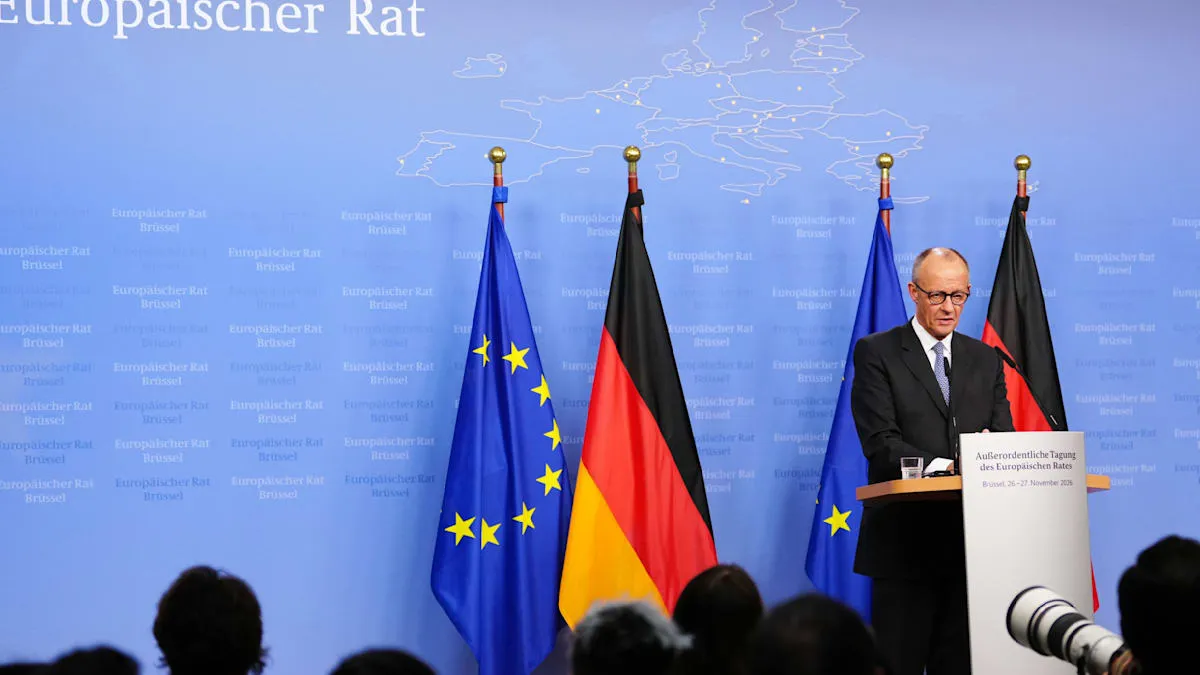
BERLIN – The German Taxpayers' Association has issued a strong warning regarding the upcoming European Union (EU) Budget Draft, predicting it will significantly burden the country. The organization urges Chancellor Merz to demonstrate firmness in negotiations, highlighting the substantial savings potential that could be implemented within the Brussels administration.
Michael Jager of the Taxpayers Association of Europe affirmed that the next EU financial framework, expected to commence in 2027, must not become a rotten compromise that harms German taxpayers. Jager believes there are still many avenues Brussels can exploit for budget efficiency rather than burdening member states with higher demands.
This warning comes amid intense discussions concerning member states' contributions to the EU coffers. Germany, as Europe's largest economy, traditionally stands as one of the largest contributors. An additional burden in the new financial framework could trigger a wave of discontent domestically, particularly among taxpayers.
No rotten compromise, Jager stated. He called on European leaders, especially Chancellor Merz, not to succumb to unreasonable demands and to ensure that every euro spent delivers clear value for European citizens.
In its appeal, the Taxpayers' Association identified various areas where Brussels could implement savings measures. These include bureaucratic rationalization, a review of less efficient projects, and optimized allocation of funds for programs that yield tangible impacts.
EU budget negotiations are always a complex process, involving competing interests among member states. However, the current insistence from taxpayer organizations adds significant political pressure on Chancellor Merz, who must balance European commitments with Germany's national interests.
As previously reported, a previous EU budget summit also stalled due to Chancellor Merz's resolve in halting trillion-euro negotiations. This indicates that Merz has a track record of defending Germany's financial interests on the European stage.
On another note, Germany's domestic political conditions are also a factor. With issues such as Chancellor Merz's plummeting popularity, every budget decision with the potential to attract public criticism must be considered very carefully. This pressure comes alongside public attention to how Germany's own national budget is managed, considering Germany's record-breaking 2027 budget.
The anti-waste agency specifically highlighted the necessity for stricter oversight of the European Commission's administrative expenditures. They argue that internal efficiency must be a priority before requesting increased contributions from member states. This is a fundamental principle of sound financial management that needs to be applied at the supranational level.
Given that the EU's multi-annual financial framework (MFF) covers various sectors ranging from agriculture, regional cohesion, to research and innovation, the scope for review and savings is indeed vast. The ball is now in the court of negotiators and Chancellor Merz to ensure that the next EU budget is not only fair but also sustainable and efficient.
Editorial Insight:
The German Taxpayers' Association's pressure on Chancellor Merz reflects the perennial tension between the European Union's ambitions and the fiscal realities of its member states. In the context of global economic uncertainty in 2026, any increase in Germany's financial burden will be met with sensitive responses from the public and market players. Merz's firmness in the 2027 EU budget negotiations is not merely about figures, but also about maintaining taxpayer trust and positioning Germany as a vanguard of efficiency within the European bloc. Failure to achieve a fair compromise could exacerbate Eurosceptic sentiment in Germany.