 Edward DP Situmorang
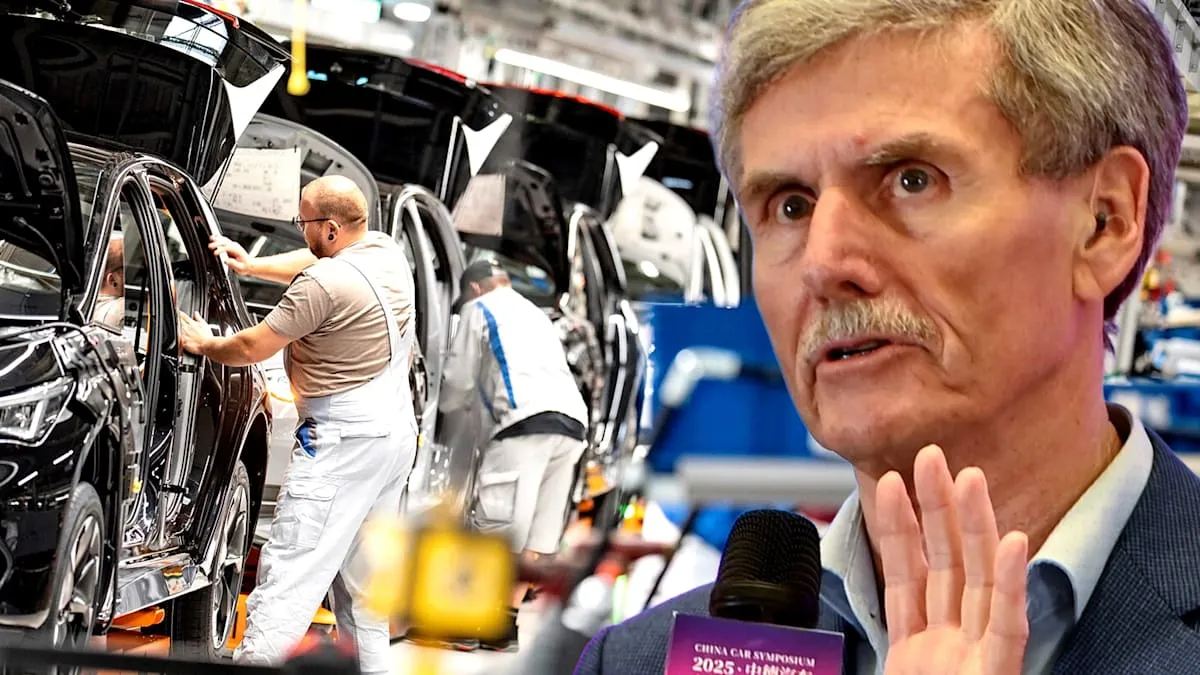
FRANKFURT – The German automotive industry faces a historic crisis threatening its existence, a sharp warning from leading automotive expert Ferdinand Dudenhoeffer. In an exclusive interview with WELT, Dudenhoeffer highlighted aggressive competition from Chinese electric vehicle manufacturers and Tesla, urging massive investment in modern manufacturing technologies and industry standardization for future sustainability.
According to Dudenhoeffer, the current situation confronting Germany's automotive sector is not an ordinary shock, but a fundamental threat potentially altering the industry's landscape permanently. 'If this doesn't work out and we continue to strike, then good night, auto industry,' he stated plainly, referring to the fatal consequences if these challenges are not comprehensively addressed immediately.
The existence of the German car industry, long the backbone of the national economy and a symbol of engineering excellence, is now in question. The transition from internal combustion engines to electric vehicles presents a major disruption, demanding rapid adaptation that has not been fully realized by the country's giant corporations.
Competition from China emerges as a dominant force that cannot be ignored. Chinese car manufacturers are known for massive production capacity, lower labor costs, and extraordinary innovation speed in developing electric vehicle technology. They not only dominate the domestic market but are also encroaching on global markets, including Europe, with innovative models and competitive prices.
On the other hand, Tesla from the United States continues to be a benchmark for innovation and production efficiency. Tesla's pioneering role in battery technology, software, and manufacturing approaches such as Gigacasting has set new standards that are difficult for traditional manufacturers to catch up to. Their direct-to-consumer business model also gives them an advantage in the value chain and customer experience.
Dudenhoeffer specifically called for greater investment in modern manufacturing techniques, including Gigacasting. This technology allows for the production of larger car body components in a single mold, reducing part count, simplifying assembly processes, and significantly lowering production costs. Adopting Gigacasting is believed to enhance the competitiveness of German manufacturers.
Beyond manufacturing innovation, stronger standardization across the industry is also deemed crucial. Standardization can cut research and development costs, accelerate product launch times to market, and create a more efficient ecosystem for suppliers and manufacturers. This will enable closer collaboration and a more agile response to market changes.
The German automotive industry, with iconic brands like Mercedes-Benz, BMW, and Volkswagen, boasts a long heritage of precision engineering and quality. However, this tradition is now a double-edged sword; on one hand, it's an advantage, on the other, a burden hindering agility in innovating and adapting to radical new technologies.
The threat to this industry impacts not only companies and shareholders but also millions of workers and the entire German economy. The automotive sector contributes a significant portion to the country's GDP and exports, so a crisis in this sector would have widespread domino effects, impacting related sectors from manufacturing to services.
The German government also faces immense pressure to formulate policies supporting this transformation, ranging from investment incentives, research and development support, to retraining programs for the workforce. Collaboration among industry, academia, and government is key to navigating this turbulent period.
Editorial Insight: Ferdinand Dudenhoeffer's warning highlights the genuine urgency for the German automotive industry. The challenges from Chinese manufacturers and Tesla are not just ordinary market competition, but a paradigm shift in technology and manufacturing that demands a fundamental response. Failure to invest aggressively in technologies like Gigacasting and standardization could lead to Germany losing its global leadership position in automotive, with massive economic and social consequences. This transformation requires political courage, industrial collaboration, and a long-term commitment to innovation.