 Debby Wijaya
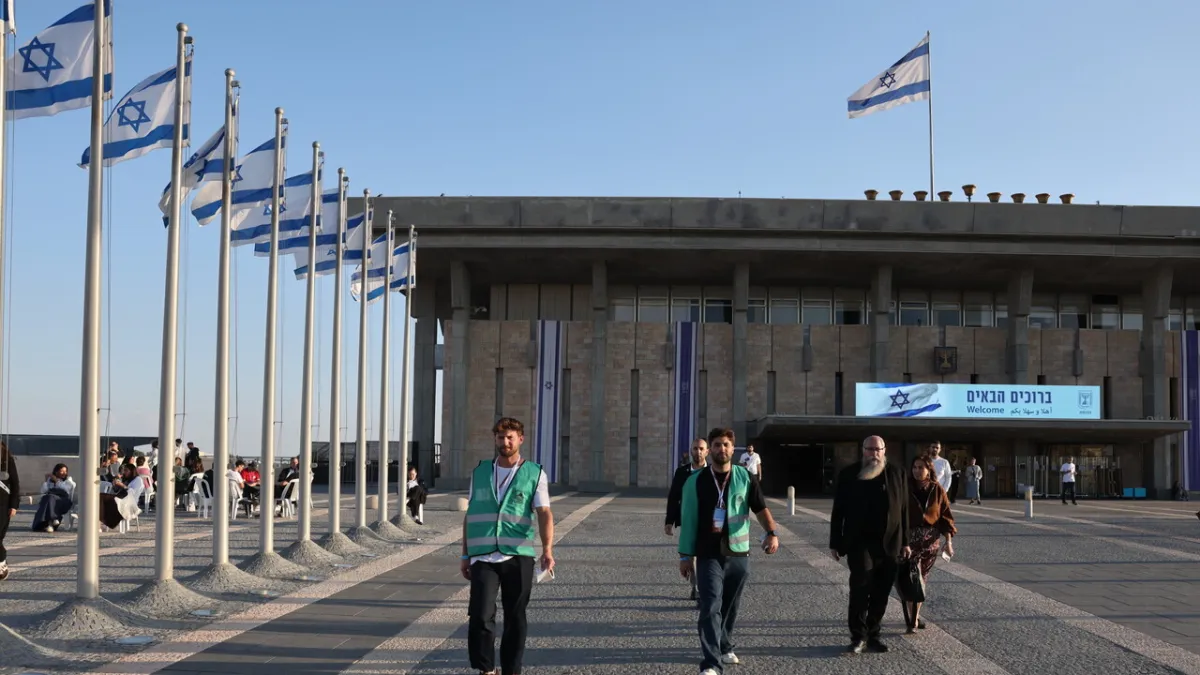
Jerusalem – The definitive results of the 2026 Israeli election confirm that the bloc led by Prime Minister Benjamin Netanyahu secured the most votes, but without achieving an absolute majority in the Knesset. This situation positions the Arab parties as the kingmakers, holding significant potential to reshape the dynamics of the upcoming Israeli coalition government formation.
The election, held amidst high tensions, has created a highly fragmented political landscape, a scenario not unfamiliar to the Israeli political arena. Although the right-wing bloc led by Netanyahu outperformed its rivals, their seat count remains short of the 61-seat threshold required to form a stable government independently.
Political analysts anticipate that the failure to secure a majority will trigger complex and protracted coalition negotiations. Israeli history shows that government formation often requires deep compromises and unexpected alliances, which sometimes lead to swift coalition collapses.
Arab parties, traditionally outside the main circles of power, now find themselves in an unprecedented position. With their votes, these non-Zionist political forces could potentially determine the direction of Israel's government. Previously, the involvement of Arab parties in government coalitions was considered taboo by some right-wing factions.
However, the political reality of 2026 demands flexibility. Without support from smaller parties or even a historical breakthrough with Arab parties, Netanyahu's path back to the prime minister's office will be steeper. Speculation about the possibility of a broader coalition, including a national unity option, has begun to circulate among observers.
Eli Cohen, a political observer from Tel Aviv University, stated, 'This is a crucial moment for Israeli democracy. The power of Arab parties can no longer be ignored, and every prime ministerial candidate must consider this reality in their calculations.'
The pressure to form a stable government is immense, given the various domestic and regional challenges Israel faces. From economic issues to complex security matters, all require solid leadership and strong legislative support.
Israel's political map is now colored by a broad spectrum of parties, ranging from ultranationalists to progressives, making every coalition-building effort like solving a complex puzzle. Negotiations are predicted to involve intensive bargaining over crucial issues such as budget, social policies, and, of course, regional conflict matters.
A previous article titled Israel Burns: 2026 Election Legitimacy Challenged by Vote Manipulation Allegations indicated deep-seated political tensions even before the final results were announced. This adds another layer of complexity to the process of forming a legitimate and recognized government.
Following this political upheaval, Israeli society anxiously awaits how their leaders will navigate the coalition labyrinth. Will this be a new era of political collaboration or merely prolong a period of uncertainty? Only time will tell.
Nonetheless, one thing is clear: the 2026 Israeli election results have marked a new chapter in the country's political history, where the role of minority parties, especially Arab parties, will be a central focus.
Editorial Insight:
The political situation in Israel post-2026 elections reveals a paradigm shift. The reliance on Arab parties to achieve a majority is not just a challenge for Benjamin Netanyahu but also an opportunity for a more inclusive political reconfiguration. If a coalition successfully forms with substantial support from the Arab bloc, it could signify a new era in Israeli politics, potentially altering approaches to both domestic and regional issues. However, the risk of political deadlock and instability remains high, demanding visionary leadership and a willingness to compromise from all parties involved.