 Demian Sahputra
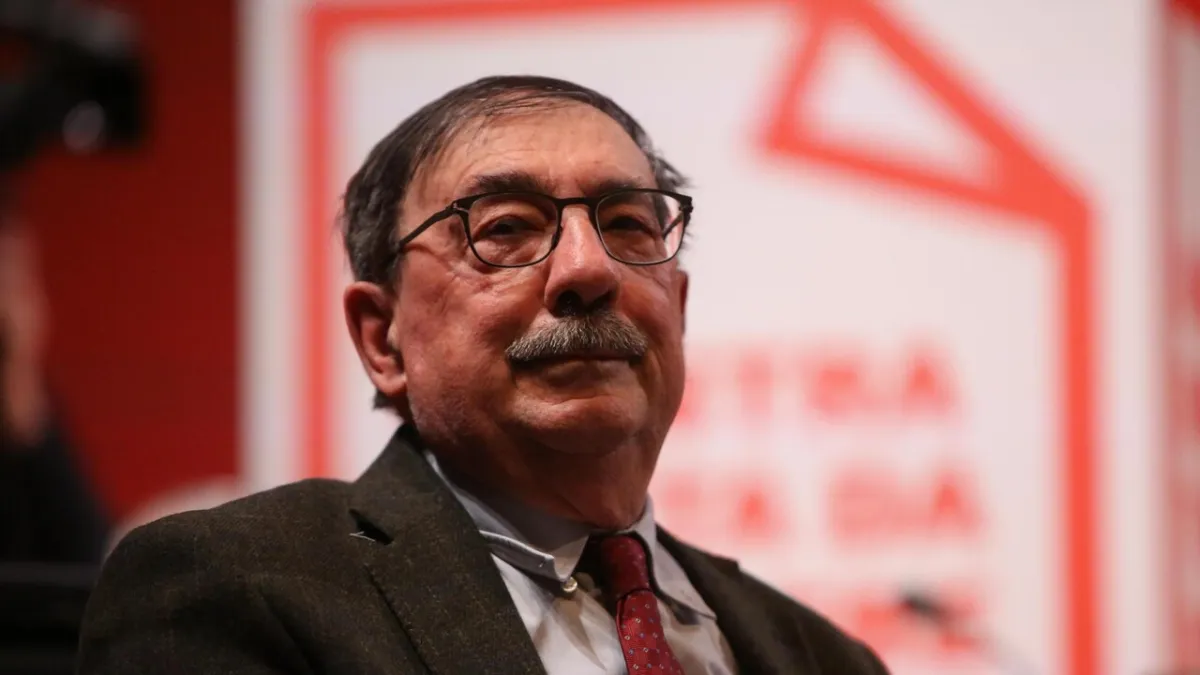
ROME – The Italian political scene is gripped by profound sorrow following the passing of Fabio Mussi, a brilliant intellectual and former minister in Romano Prodi's cabinet. This figure, known as a key leader within Sinistra Italiana Avs, breathed his last, leaving behind a legacy of progressive thought and a long-standing dedication to social and educational reform in the country.
The news of Mussi's death quickly spread, triggering a wave of tributes from across the political spectrum. He is remembered as a tireless individual who fought for ideals of justice and equality, making him one of the intellectual pillars of the Italian left for several decades.
Fabio Mussi began his political journey in the 1970s, deeply rooted in student and labor movements. His sharp intellect and captivating rhetoric quickly brought him to the national stage. Before becoming part of Sinistra Italiana (Italian Left), he had a significant track record in preceding democratic left parties, including the Italian Communist Party (PCI) and the Democratic Party of the Left (PDS).
His dedication to education and systemic reform was a hallmark of his career. As a university professor, Mussi deeply understood the importance of knowledge as the foundation for national progress. His views often served as crucial references in formulating progressive policies.
His executive career peaked when he served as a minister under Prime Minister Romano Prodi's government. Although the specifics of his portfolio were not always widely highlighted, his role in modernizing institutions and advocating for better access to education for all Italian citizens was fundamental. He was an architect behind several key initiatives aimed at strengthening the public sector.
During his leadership, Mussi was known for his ability to bridge ideological differences, build consensus, and foster constructive dialogue. He was not merely a politician engaged in rhetoric, but a meticulous policy designer, always adhering to the principles of social justice and solidarity.
After the Prodi era, Fabio Mussi remained active in politics, particularly as a central figure in Sinistra Italiana Avs (Greens and Left Alliance). Through this platform, he continued to voice issues concerning the environment, workers' rights, and the fight against economic inequality. His presence lent significant intellectual weight to contemporary Italian left movements.
Nicola Fratoianni, one of Sinistra Italiana's leaders, offered a touching tribute. He was a refined and curious intellectual, a politician who never succumbed to cheap compromises, Fratoianni stated, encapsulating the profound and influential essence of Mussi's personality.
Mussi's departure undoubtedly leaves a void, not only among his party colleagues but also among those who knew him as a mentor and thinker. His legacy as a man of steadfast principles and broad vision will continue to inspire generations of young Italian politicians.
On several occasions, Mussi was also involved in discussions regarding social and ethical policy directions in Italy, including heated debates about medical autonomy and the right to end-of-life choices. His rational and humanist approach always provided a counterbalance in sensitive polemics, such as those summarized in the debate over the End-of-Life Law in Veneto, reflecting his progressive yet sensible thinking.
Fabio Mussi exemplified how politics can be a means to achieve the common good, not just a struggle for power. His life was dedicated to building a more just, inclusive, and knowledgeable society. He will always be remembered as one of the architects of modern Italian left-wing thought.
Editorial Insight: The passing of Fabio Mussi is a significant loss for the Italian political landscape, especially for the left spectrum which must now face new challenges without one of its strategic thinkers. Mussi's intellectual legacy and dedication to social reform will serve as an important guide for Sinistra Italiana Avs in navigating the political dynamics of 2026. His departure may also trigger deeper reflection on the direction and relevance of left-wing ideology amidst the complexities of Italy's global and domestic challenges, including testing the leadership capacity within Sinistra Italiana Avs to uphold the integrity and vision instilled by a figure of Mussi's caliber.