 Angel Doris
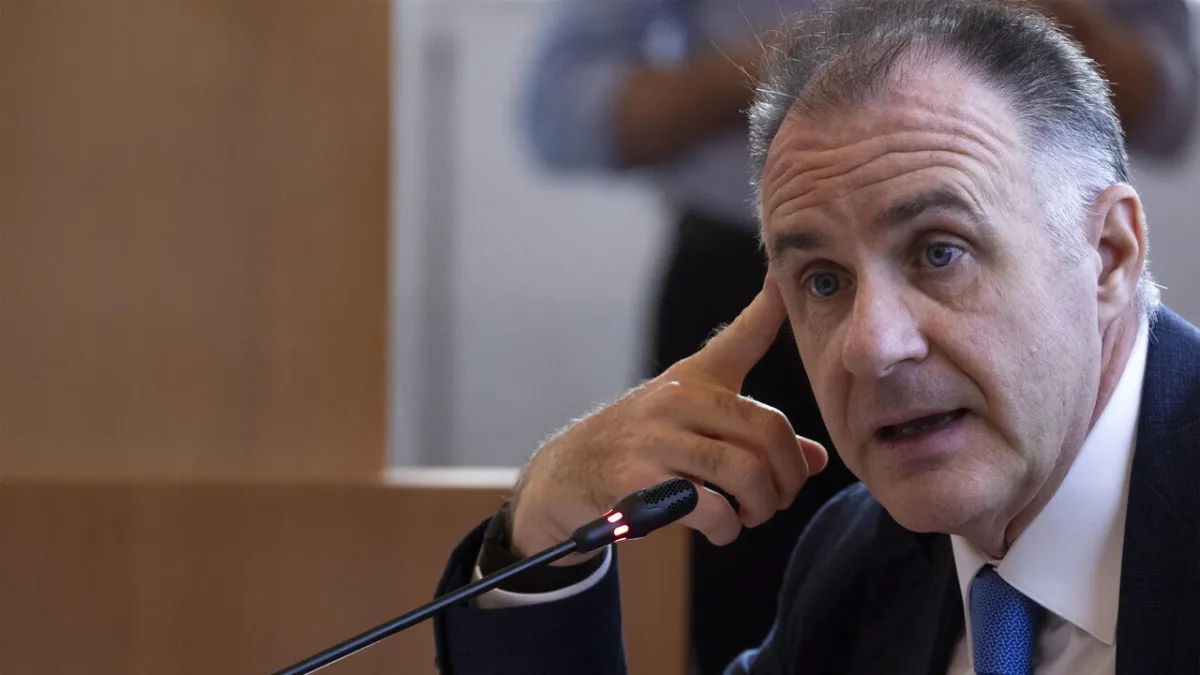
ROME – The outlook for Italy's economic maneuver in 2026 faces significant challenges, triggering strong calls from industry for the government to address private sector concerns. Antonio Orsini, a leading economic observer, stated that the situation is a 'complicated moment' that requires 'concrete answers' from policymakers.
Concurrently, the President of the General Confederation of Italian Industry (Confindustria), Emma Marcegaglia, explicitly urged policymakers to 'listen to industry' and 'work together' for national economic stability and growth. This statement was made at a strategic economic forum attended by various stakeholders.
This urgent appeal comes amidst persistent global uncertainties and domestic pressures plaguing Italy. Rising energy prices, stubborn inflation, and an economic slowdown among key trading partners are all factors complicating the national budget's formulation.
Orsini emphasized that the government can no longer delay decision-making. The industrial sector, which forms the backbone of the Italian economy, requires regulatory certainty and clear fiscal stimuli to maintain competitiveness and prevent potential investment contraction.
The economic maneuver typically includes a package of fiscal policies, public investments, and structural reforms designed to stimulate the economy in the short to medium term. Its effectiveness heavily depends on the government's ability to embrace input from the real sector.
Marcegaglia highlighted that 'working together' is not merely a one-way dialogue. The industry seeks a substantial partnership where its proposals and concerns are proactively integrated into policy formulation, rather than simply being footnotes.
Some key concerns raised by industry include the persistently high tax burden, cumbersome bureaucracy, and the need for greater investment in innovation and green transition. Without adequate responses, the potential for industrial relocation to other countries could become a serious threat.
Historically, collaboration between government and industry has been key to overcoming crises and fostering periods of growth. Past communication failures have often led to ineffective policies and exacerbated economic challenges.
Fiscal policy in Italy has always been a battleground between the government and the real sector. Prime Minister Meloni's administration previously stirred Italy with flat tax policies supporting self-employed workers, demonstrating that every fiscal step inevitably has broad impacts and elicits reactions from various parties.
This situation also demands attention from the European Central Bank and the European Union, which continually monitor the economic stability of their member states, including Italy. Inappropriate policies could trigger broader systemic vulnerabilities within the Eurozone.
Authorities are expected to find a balanced common ground between maintaining fiscal discipline and responding to the urgent needs of the productive sector. A smart and visionary compromise will determine Italy's pace of recovery and long-term growth prospects amidst the volatile global economic landscape of 2026.
Editorial Insight:
The current situation highlights the complex power dynamics between politics and industry in Italy. Confindustria's urgent call, represented by Emma Marcegaglia, is not merely rhetorical; it is a strong indication that the private sector feels the economic policies being drafted are insufficiently responsive to on-the-ground realities. If the government fails to provide 'concrete answers' as articulated by Antonio Orsini, the 2026 economic maneuver risks losing momentum or even worsening investment conditions. The balance between political ambition and economic pragmatism will be a crucial determinant for Italy's future economic resilience.