 Dorry Archiles
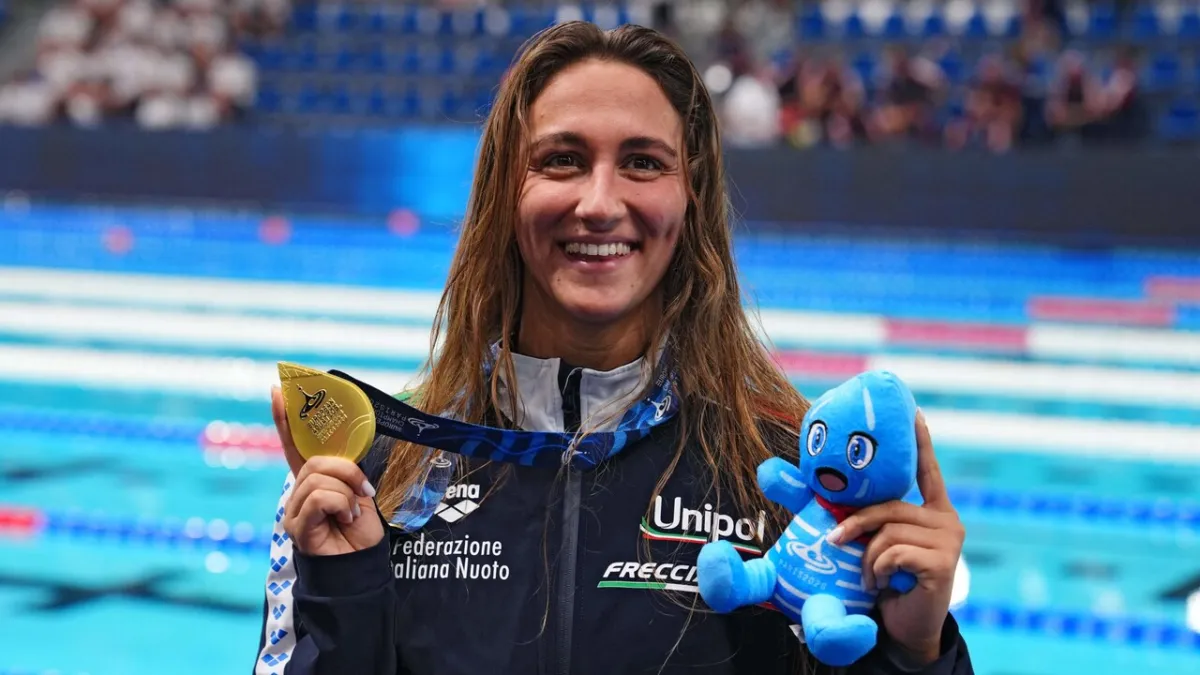
ROME – The European swimming arena witnessed an undeniable dominance from Italian athletes at the 2026 European Swimming Championships. Federica Quadarella, the freestyle star, once again etched glorious history by securing her fourth consecutive gold medal in the 800-meter freestyle event, solidifying her position as a living legend in the continent's pools. This extraordinary achievement was also accompanied by medal gains from other Italian swimmers, collectively placing Italy at the forefront of the competition.
Quadarella's success is not just an ordinary victory; she has built a dynasty in the 800-meter freestyle. Since her debut, the 27-year-old swimmer has consistently delivered prime performance, overcoming challenge after challenge with remarkable endurance and speed. This year's win serves as an absolute affirmation of her consistency at the highest level.
Beyond Quadarella, attention was also drawn to Nicolo Martinenghi. This breaststroke specialist successfully presented Italy with a gold medal in the men's 100-meter breaststroke event. His explosive performance from start to finish of the race proved his superiority among formidable European competitors.
The celebratory atmosphere of Italy's medal haul was further completed by a bronze contribution from Lorenzo Cerasuolo, who also competed in the 100-meter breaststroke. The presence of two Italian swimmers on the same podium demonstrates the depth of talent and effective training programs within the men's breaststroke discipline.
Meanwhile, in the women's sector, Sara Curtis did not want to be left behind. She successfully claimed third place, taking home a bronze medal in the 100-meter freestyle. Curtis's performance signifies a promising regeneration of Italian female athletes, ready to compete on the international stage.
However, not everything went smoothly. Thomas Ceccon, known for his butterfly specialization, had to settle for fourth place in the men's 50-meter butterfly event. Although he did not win a medal, his performance remained competitive and offers hope for improvement in future events.
This series of achievements underscores the resurgence of Italian swimming in Europe. Consistency in athlete development, federation support, and a high fighting spirit are key factors behind these impressive accomplishments. Italy is now not just a competitor, but also a dominant force to be reckoned with.
Swimming enthusiasts worldwide, especially in Italy, celebrate this historic moment. The medals brought home are not only a source of national pride but also an inspiration for the younger generation to pursue swimming and chase their dreams on the international stage.
The Italian government and the National Olympic Committee (CONI) are expected to continue providing full support to maintain this positive momentum. Investment in facilities, quality coaches, and youth athlete development programs are crucial to keep Italy at the top of the global swimming competition map.
Editorial Insight: Italy's dominance at the 2026 European Swimming Championships, particularly Quadarella's record-breaking achievement, indicates that their athlete development programs are on the right track. Consistency in securing gold medals across various disciplines highlights a mature swimming ecosystem. However, the real challenge lies in sustaining this momentum and expanding it to global events like the Olympics, where competition will be much tougher. This success could also trigger an increase in public interest in swimming, potentially producing more talents in the future.