 Angela Stefani
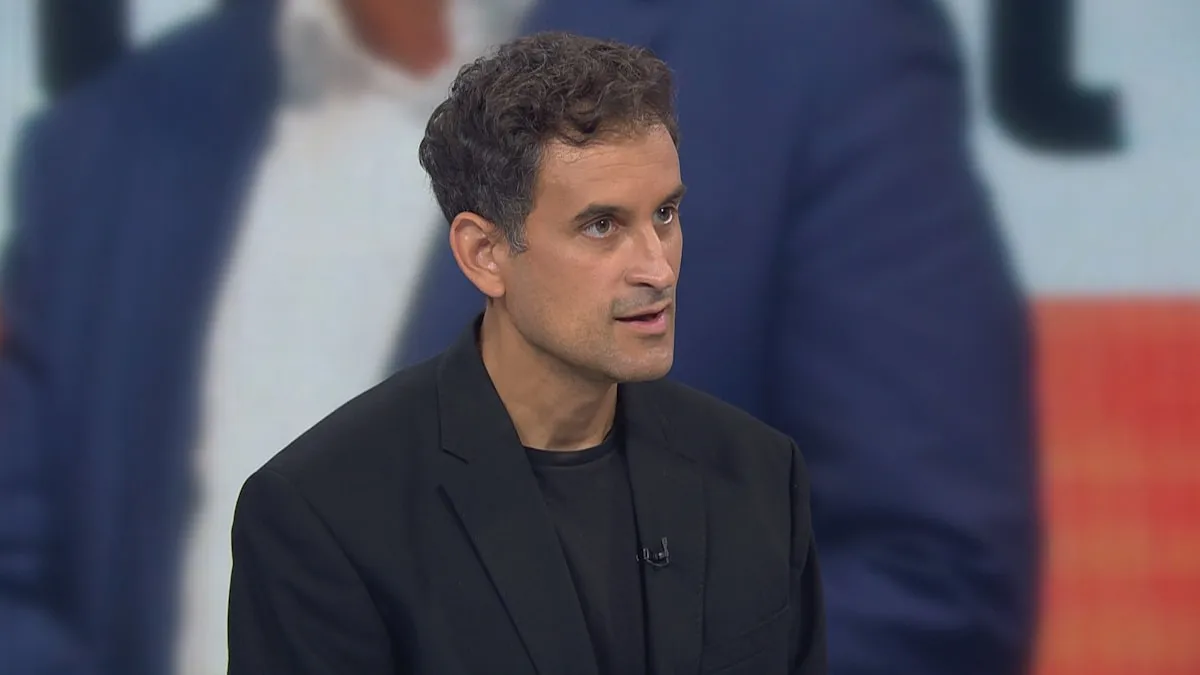
Philipp Peyman Engel, Editor-in-Chief of Jüdische Allgemeine, launched a scathing critique against the Christian Democratic Union (CDU) election campaign in the German state of Saxony-Anhalt. Engel described the campaign strategy involving actor and comedian Dieter Hallervorden as "suicide out of fear of death" and an undignified and absurd spectacle, warning of dangerous political relativism ahead of the 2026 regional elections.
The criticism emerged amidst intense debate regarding ethics and substance in German politics. Engel's statement, from one of the leading voices in the German Jewish community, highlights deep concerns about the evolving direction and quality of political discourse.
In his view, the use of public figures like Hallervorden, especially in the context of previous political controversies, blurs the lines between party principles and electoral pragmatism. He emphatically stated, "That is an undignified and absurd spectacle."
Berlin — Engel specifically targeted CDU Saxony-Anhalt's decision to collaborate with Hallervorden, who in the past had attracted attention for certain views deemed controversial by some circles. This collaboration is labeled as a risky tactic, potentially eroding the party's integrity.
Engel explained that what he witnessed was an indication of "dangerous political relativism." This kind of relativism, he argued, threatens the foundation of democratic values and political ethics, where truth and principles can be negotiated for short-term gains.
As Editor-in-Chief of a newspaper advocating for the interests of the Jewish community, Engel holds a unique position to assess shifts in Germany's political climate. Concerns about the rise of extremism and the decline in the quality of public debate are frequently highlighted by Jüdische Allgemeine.
The issue of political relativism is not new in the German political arena, especially with the prevalence of polarization and populism. However, Engel's criticism offers a fresh perspective, directly linking it to the campaign strategy of a mainstream party.
CDU Saxony-Anhalt has not yet issued an official response to Philipp Peyman Engel's sharp criticism. Nevertheless, this statement is likely to spark internal and external discussions regarding their campaign strategy choices.
The upcoming regional elections in Saxony-Anhalt in 2026 will serve as a crucial test for various political parties. The chosen campaign strategies will reflect how parties adapt to the constantly changing political landscape and voter demands.
Engel's statement also underscores the role of independent media and intellectual figures in overseeing and critiquing democratic processes. Jüdische Allgemeine consistently serves as a mouthpiece for crucial issues affecting German society.
Although Hallervorden is widely known as an entertainer, his involvement in political campaigns is now under a microscope, especially following this highly public criticism. The public might recall Hallervorden's Attack Shakes CDU Stage from previous incidents. Public perception of the CDU campaign in Saxony-Anhalt could be significantly affected.
This case is not the first time political criticism has emanated from community-based media. Voices like Jüdische Allgemeine often act as a moral and ethical barometer within society, highlighting aspects that might be overlooked by the mainstream.
It will be interesting to observe how CDU Saxony-Anhalt will respond to this "political suicide" narrative. Will they maintain their strategy or reconsider their approach for the remainder of the campaign period?
This also raises broader questions about the blurred lines between entertainment and politics, as previously highlighted in the article Hallervorden Shakes German Politics. Can entertainment figures carry political messages without raising doubts about credibility or intent?
In the context of German politics in 2026, where inter-party dynamics are highly complex, every campaign move is closely scrutinized. Engel's comments add a new layer of complexity for the CDU in Saxony-Anhalt.