 Dorry Archiles
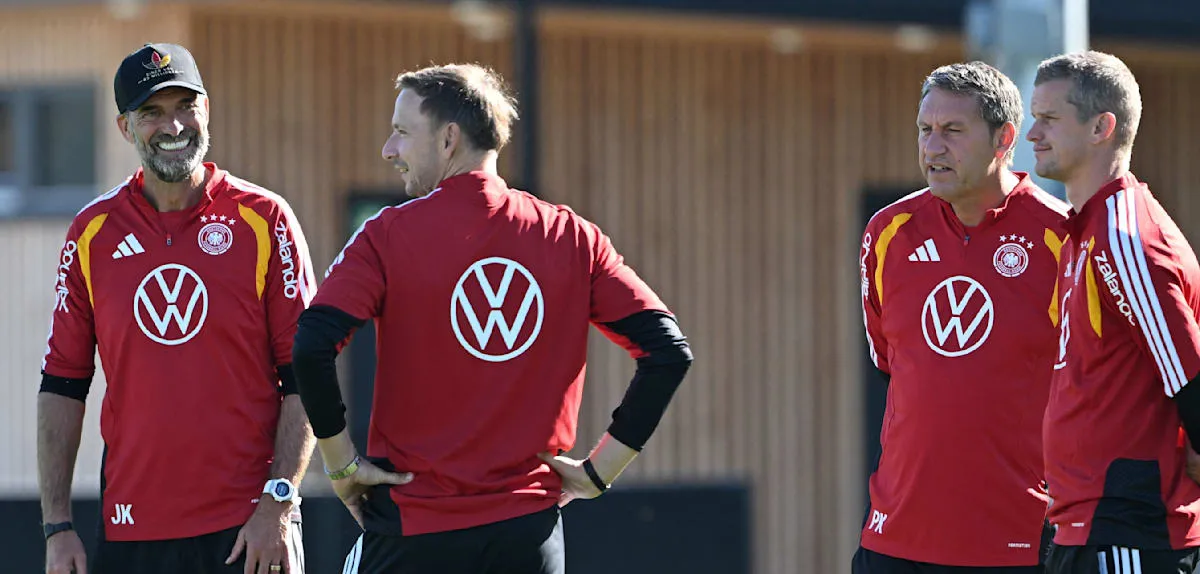
FRANKFURT – Jurgen Klopp, head coach of the German national team, has restructured the internal framework of the German Football Association (DFB) by establishing a new sporting power hub. This move involves appointing several long-time confidants, underscoring Klopp's vision to build a solid foundation with a coaching staff that deeply understands his philosophy and working methods for the success of German football.
This decision marks a new era in national team management, where Klopp aims to foster a cohesive working environment aligned with his intensive, relationship-based approach. The new structure is expected to accelerate the implementation of coaching strategies that have proven successful in his previous club roles.
The staff members now occupying key positions within the DFB are not new names to Klopp. They are individuals who have supported him through various challenges and triumphs, from his time leading Borussia Dortmund to his glorious success with Liverpool on the European stage. This extensive shared experience is a primary asset in building the desired synergy.
Their appointments are more than mere formalities. Klopp emphasizes the importance of having a team that is not only tactically competent but also possesses a profound understanding of his playing philosophy. Cohesion between the head coach and his staff is considered crucial for navigating the increasingly competitive landscape of international football.
An internal DFB source, who preferred to remain anonymous, stated, 'Klopp needs people who can read his mind. It is not just about on-field tactics, but also about the dressing room atmosphere and long-term player development. Trust is the most valuable currency here.'
The integration of these trusted staff members also reflects the DFB's effort to grant greater autonomy to the head coach in determining the technical policy direction of the team. Such a leadership model often proves effective in building a strong and consistent team identity.
While largely welcomed, this decision has also sparked discussions regarding its potential broader impact on the DFB's existing structure. However, most German football analysts view it as a bold and necessary strategic move to restore Germany's dominance on the world stage.
Klopp's approach, centered on his closest associates, has been a hallmark throughout his career. This gives him an advantage in fostering loyalty and high work efficiency. Previously, Klopp was also known to stand up for his players against criticism, demonstrating his commitment to the team.
This focus on coaching staff synergy is expected to translate Klopp's grand vision into structured and coordinated action plans. Each staff member holds a specific role, ranging from performance data analysis to the individual development of young players.
As Bundestrainer, Jurgen Klopp carries an immense burden of expectation. The German public yearns for the national team's return to glory. The formation of this new 'power hub' is a manifestation of Klopp's seriousness in designing a blueprint for success.
Klopp's decision has the potential to become a model for other football associations looking to optimize their national team's performance. The principles of trust and long-term collaboration are universal elements that can be adopted.
Editorial Insight: Jurgen Klopp's move to build a core team from his trusted circle within the DFB is a strong indicator of his commitment to a proven coaching philosophy. This is more than just personal appointments; it is a strategic effort to create a friction-free working ecosystem, allowing for quick decision-making and ensuring every team member understands the overarching vision. The biggest challenge will be integrating this new 'power hub' with the existing DFB structure without causing upheaval, while simultaneously proving that this approach can yield immediate results on the pitch.