 Chandra Wijayanto
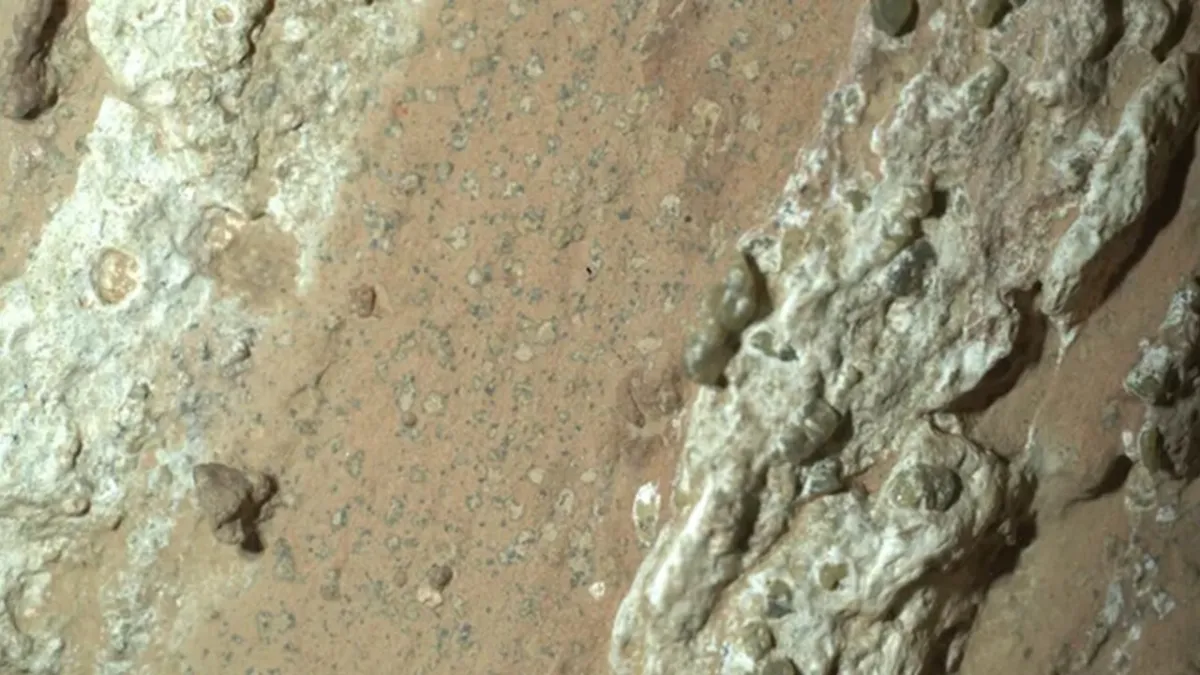
EARTH – Strong indications regarding the possibility that the planet Mars once harbored ancient life are increasingly emerging in 2026. Recent data from various Mars exploration missions reveal increasingly convincing traces, sparking optimism among global scientists. This discovery has the potential to reshape our understanding of the boundaries of life in the universe.
Several international space agencies, including NASA and ESA, through probes like the Perseverance rover and ExoMars, are consistently transmitting data showing conditions supportive of microbial life in the past. The primary focus of current research is the analysis of sedimentary rock formations and the presence of complex organic molecules.
Leading astrobiologist, Professor Elena Petrova from Sorbonne University, highlighted the significance of these findings but emphasized the need for direct verification. “The definitive answer will be obtained when we can directly analyze samples from Mars here on Earth,” Petrova stated, referring to future sample return missions.
The search for traces of life on Mars is not new. Since the Viking missions in the 1970s until now, the question of whether Mars was ever inhabited has always been a key driver of exploration. However, the tools and analytical methods in 2026 have reached unprecedented levels of precision.
The collected data includes evidence of large quantities of liquid water flowing on Mars’ surface billions of years ago, mineral-rich environments, and ancient climate changes that might have supported the survival of simple organisms. These all form increasingly complete pieces of the puzzle.
The Perseverance mission, for instance, has successfully collected dozens of rock and regolith sample tubes from Jezero Crater, believed to be the site of an ancient lake. These samples are securely stored on the Martian surface, awaiting retrieval missions scheduled for the early 2030s.
The implications of discovering life on Mars would be profound. It is not just about finding organisms beyond Earth, but also about opening a new window to understand how life began and evolved, and whether Earth is the only place in the universe that supports life.
Despite soaring optimism, the technical challenges of bringing samples back to Earth remain significant. Cross-contamination, both from Earth to Mars and vice versa, is a serious concern. Sterilization protocols and sample handling must meet the strictest standards.
Furthermore, advancements in robotic technology and artificial intelligence play a crucial role in these exploration missions. Rovers and landers now possess far more sophisticated autonomous capabilities, allowing for on-site decision-making without direct intervention from Earth.
The global scientific community welcomes these new indications with great enthusiasm, while maintaining scientific skepticism until conclusive evidence is available. Scientists hope that in the next few years, the mystery of life on Mars can be fully unveiled through direct sample analysis.
This potential life discovery also provides new impetus for future Mars colonization discussions. If Mars is proven to have once had a habitable environment, it indicates the planet's potential to support life, albeit in a different form than today, or to be engineered for human habitation.
The year 2026 marks humanity drawing closer to one of the fundamental questions of the universe. The search for traces of life on Mars is not just scientific exploration but also a search for the roots of our existence in the galaxy.