 Chris Robert
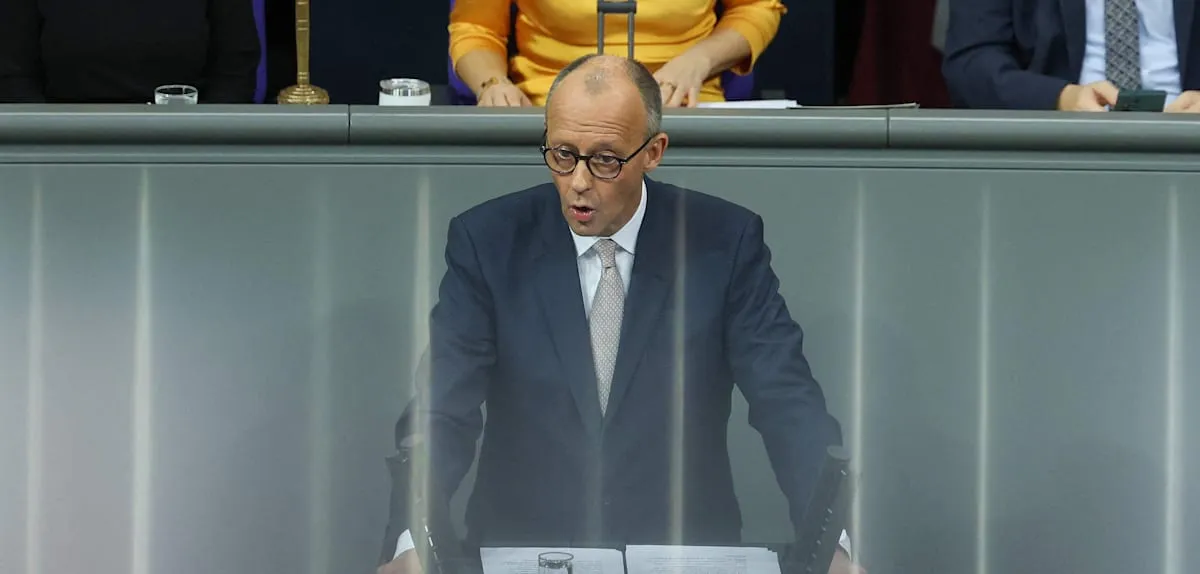
BERLIN – A fierce debate recently shook the heart of German legislature when Chancellor Friedrich Merz publicly questioned the scale of national expenditure on aid to Ukraine. The crucial moment occurred in the Bundestag, Berlin, immediately triggering a spontaneous 'Yes' from several parliament members, indicating significant dissatisfaction with budget allocations deemed excessive. Merz, in his defense, asserted that financial and military support for Ukraine represents a vital shield for maintaining Germany's own security and stability.
The provocative statement from the Chancellor reopened old wounds regarding budget priorities and the economic burden borne by German taxpayers. Since the full-scale invasion by Russia, Germany has become one of Ukraine's largest supporters, channeling billions of euros in humanitarian, financial, and military assistance. However, over time, the narrative surrounding the sustainability of this support has become divided.
The loud 'Yes' from the parliamentary benches suggests that Merz's argument, though intended to justify policy, instead ignited long-held public sentiment. Many feel that while solidarity with Ukraine is a moral imperative, domestic economic burdens in Germany also demand serious attention. This aligns with previous criticisms from various parties, including the AfD, which condemned the government's 'Debt Fest,' deeming the current budget a failure to address the real political needs of citizens.
Chancellor Merz had previously reiterated that aid to Ukraine is not merely an altruistic act, but a strategic investment. 'It's about protecting Germany,' he stated, referring to efforts to curb aggression that could potentially spread to other European territories, including Germany. However, resistance from within the Bundestag reveals a serious gap in national consensus.
Proponents of the aid argue that stopping or reducing support now would be a fatal blunder. They believe that European stability and the prevention of broader conflict depend on Ukraine's ability to defend itself. Allowing Ukraine to fall into the hands of an aggressor would open a Pandora's box of geopolitical instability that would be far more costly for Germany in the long run.
Conversely, skeptical factions highlight inflationary pressures, the energy crisis, and the need for infrastructure investment domestically. They contend that the billions of euros allocated to Ukraine could be redirected to address domestic challenges, such as infrastructure, education, and healthcare. This tension is exacerbated by a public sentiment that is beginning to feel 'war-weary' and fatigued by its economic impacts.
This debate reflects the political and economic complexities facing Germany in 2026. Between maintaining international commitments as a European powerhouse and meeting domestic welfare demands, the government stands at a crossroads. Voices rejecting large expenditures for Ukraine also raise questions about the extent to which Germany's foreign policy autonomy should be balanced with the voice of its people.
This moment in the Bundestag is not just an ordinary parliamentary interaction; it is a barometer of deep political tensions in Germany. This turmoil has the potential to influence Germany's future foreign policy and budget direction, especially leading up to the next general election. This discourse could also strengthen the position of opposition parties that have voiced similar criticisms against government policy.
Furthermore, this event also provides a clear picture of the challenges facing the European Union as a whole in maintaining a united front against external aggression. If key member states like Germany begin to show hesitation, it could send the wrong signal to the international community and other geopolitical actors. Internal harmony in the Bundestag serves as a mirror of European solidarity currently being tested.
Editorial Insight:
The open debate sparked by Chancellor Merz in the Bundestag is a clear indication of mounting pressure on the German government regarding Ukraine aid. This is not merely a rhetorical question but a reflection of deepening polarization within domestic politics and German society concerning national priorities. Public anxiety over the budget burden presents a significant challenge for the ruling coalition, forcing them to navigate a delicate balance between geopolitical commitments and the welfare of its citizens. How the government responds to these pressures will determine not only Germany's internal stability but also its standing in Europe and globally.