 Dorry Archiles
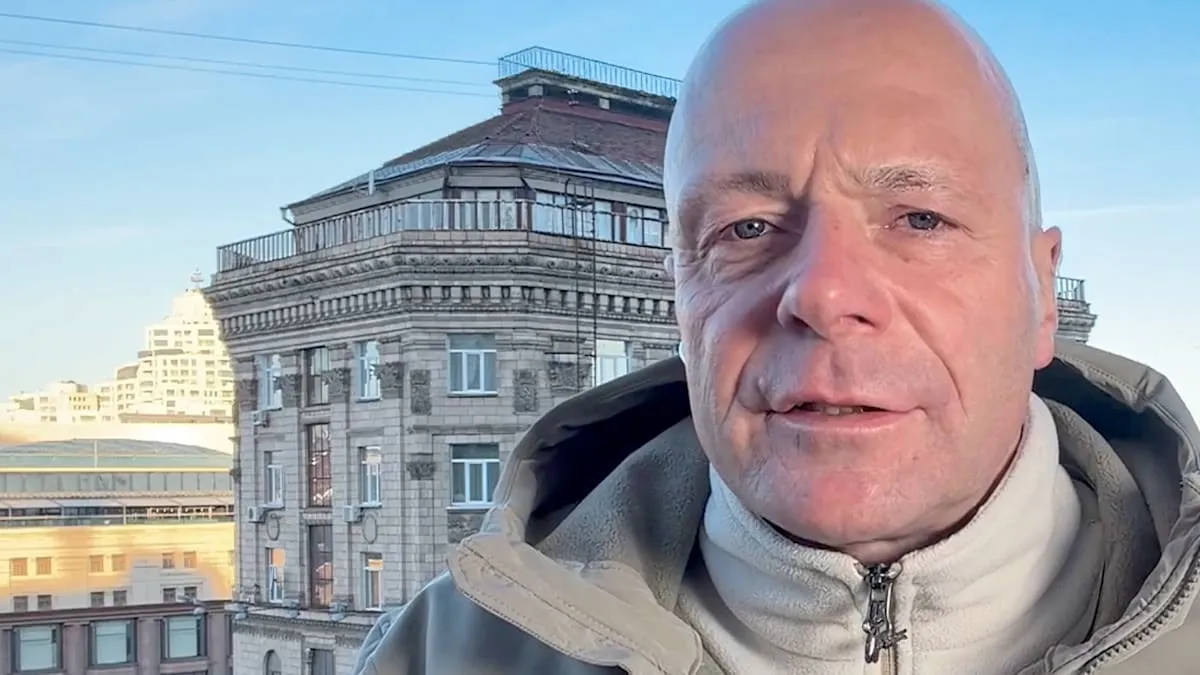
MOSCOW – Contradictory signals regarding Western Europe's role in peace talks are now emerging from the Kremlin, highlighting the central role of Yuri Ushakov, an influential figure known as Putin's Whisperer. This development, closely observed by WELT correspondent Christoph Wanner in 2026, fuels speculation about the direction of Russian diplomacy and the future of regional stability.
Ushakov, a veteran diplomat with decades of experience, has long been considered one of President Putin's closest and most trusted advisors. The moniker Putin's Whisperer reflects his deep understanding of the Kremlin's internal dynamics and his ability to influence vital strategic decisions.
His presence in every crucial issue, particularly those related to foreign policy and global security, means that every one of his moves carries significant weight. International analysts often interpret his actions as indicators of potential shifts in Russian policy direction.
Information emanating from Moscow concerning Western Europe's participation in peace dialogues has not been uniform. Some indications suggest openness to involvement, while others imply resistance or certain conditions that may be difficult for European nations to meet.
This divergence in narratives creates uncertainty among geopolitical observers and global leaders, who are trying to decipher the compass of Russian diplomacy amid an ongoing and intense conflict.
Christoph Wanner, a WELT correspondent, emphasizes Ushakov as a grey eminence at the heart of the Russian government. This term describes an individual who wields significant power and influence behind the scenes, often without a prominent public office that directly reflects their true authority.
Ushakov's track record in guiding Russian foreign policy spans decades, placing him among the few individuals with direct access to the President and complete trust in state affairs.
This dynamic is crucial given the urgency of peace talks. The involvement or rejection of Western European participation could fundamentally alter the negotiation landscape, affecting the speed and potential success of critical global tension reduction efforts.
On the other hand, Western European nations themselves continue to evaluate their strategies. While there is a genuine desire for peace, they also face the dilemma of how much compromise is acceptable without sacrificing principles of sovereignty and regional security.
How Yuri Ushakov will shape Moscow's narrative moving forward remains a key question. Whether he will foster consensus or reinforce a tougher stance will largely determine the trajectory of Russian diplomacy on the global stage.
Editorial Insight: The role of individuals like Yuri Ushakov often becomes a crucial determinant in global geopolitics, extending beyond mere diplomatic formalities. These contradictory signals from Moscow could be a negotiation tactic to gauge the West's response, or a reflection of internal debates within the Kremlin. It is vital to monitor not only official statements but also the behind-the-scenes dynamics orchestrated by influential figures such as Putin's Whisperer to understand the true direction of Russian foreign policy in 2026.