 Dodi Irawan
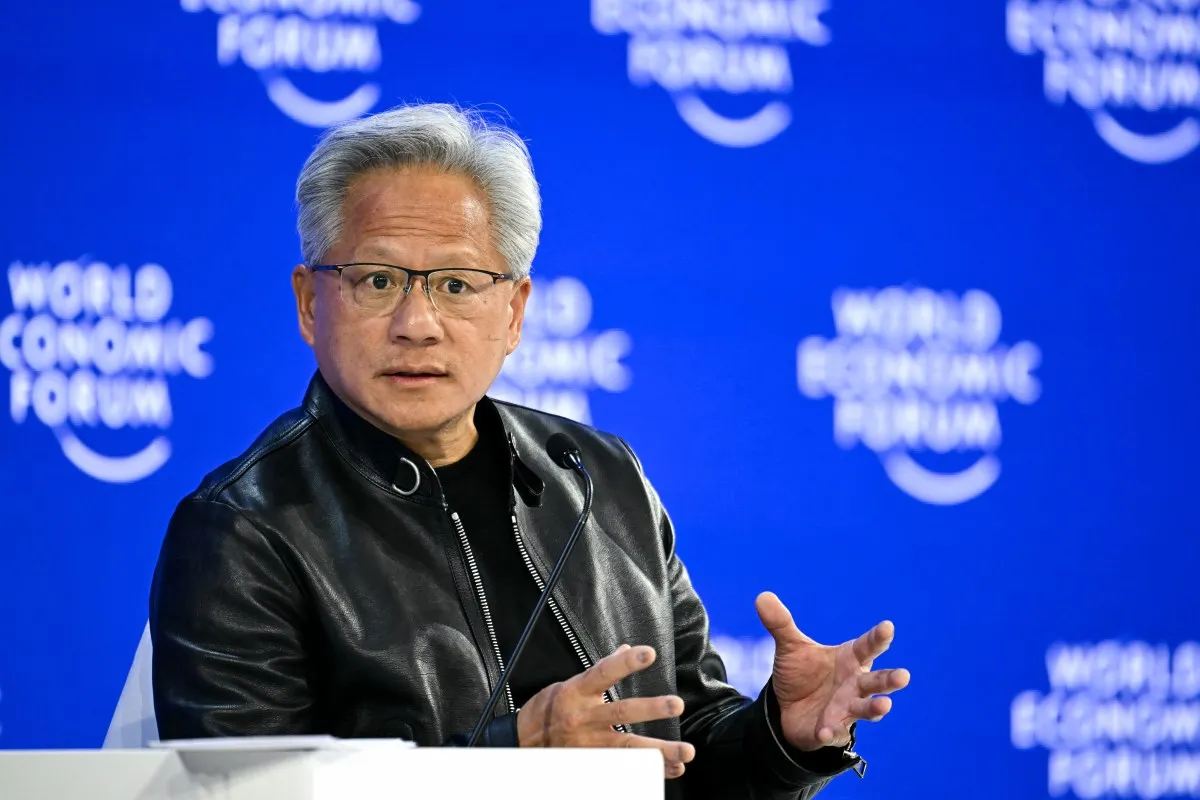
SILICON VALLEY – Global semiconductor giant Nvidia faces a contradictory dual narrative in 2026. On one hand, the company's latest earnings report reveals a stellar financial performance, marking significant record profits driven by its dominance in the artificial intelligence (AI) chip market. Simultaneously, however, several prominent tech executives are vocally advocating for visionary CEO Jensen Huang to return to direct day-to-day operational leadership at Nvidia, indicating underlying concerns amidst the impressive figures.
Nvidia's recently released financial report has astonished many, showcasing exponential growth. The company continues to solidify its position as the backbone of the AI revolution, with insatiable demand for its graphics processing units (GPUs) from data centers, AI startups, and tech behemoths alike. Market analysts hail this achievement as a testament to Nvidia's leadership in AI technology innovation.
Nvidia's dominance within the AI ecosystem extends beyond hardware. Software platforms like CUDA have fostered strong loyalty among developers, establishing Nvidia's products as an industry standard that is difficult to dislodge. The surge in AI applications, ranging from the development of large language models to AI-powered microdramas that are transforming actor's faces in Hollywood, directly fuels the demand for Nvidia's offerings to unprecedented levels.
Amidst this financial euphoria, discordant voices have emerged from elite tech circles. Several top executives, who preferred to remain unnamed due to the sensitivity of the issue, have openly stated to the media that they miss Jensen Huang's direct involvement in strategic and daily operational decisions. They feel the company needs Huang's visionary insight and innovative courage more intensely.
These concerns reportedly center on several aspects. Firstly, the perception of increasingly fierce competition in the AI chip market, now joined by new formidable players. Secondly, there are worries about Nvidia's pace of innovation and adaptability to the rapidly dynamic technological landscape. They believe Huang's deeper engagement would keep the company at the forefront, much like advanced AI agents are revolutionizing communication.
Jensen Huang, often dubbed the Steve Jobs of AI, currently serves as Nvidia's CEO and co-founder. However, in recent years, his focus has shifted more towards long-term vision, high-level strategic innovation, and public representation, delegating much of the day-to-day operations to his executive team. Those advocating for his return desire a more hands-on oversight of crucial details.
This situation creates a perceptual dilemma in the market. Is the current visible financial success merely a momentum or the result of a solid long-term strategy? Do the calls for Huang's return reflect a lack of confidence in the existing internal management, or simply a desire for the founder's magic touch amidst a heating competitive climate?
Market analysts are closely watching how Nvidia will respond to these internal and external pressures. Changes in leadership structure or operational focus could significantly impact stock prices and investor confidence, especially given the tech market's sensitivity to visionary leadership. Nvidia must either convincingly demonstrate that its current strategy is optimal or make necessary adjustments.
Nvidia's phenomenon also reflects broader challenges faced by technology companies in the AI era. With incredibly rapid growth, there is often a tension between maintaining innovation momentum driven by charismatic founders and building scalable, sustainable management structures.
High-growth companies like Nvidia, whose market capitalization continues to soar, are always under public and investor scrutiny. They are not only expected to deliver numbers but also to possess a clear and solid long-term leadership vision. This dichotomy serves as a true test for the sustained dominance of Nvidia in the global AI arena.
Editorial Insight: The dichotomy between stellar financial performance and calls for deeper CEO involvement underscores the complexity of leading cutting-edge technology companies in 2026. This is not merely a performance issue but also about how a major corporation balances founder-driven innovation with the need for robust and adaptive governance. Moving forward, Nvidia's response to these internal dynamics will be a crucial determinant of its position at the apex of the AI industry.