 Chris Robert
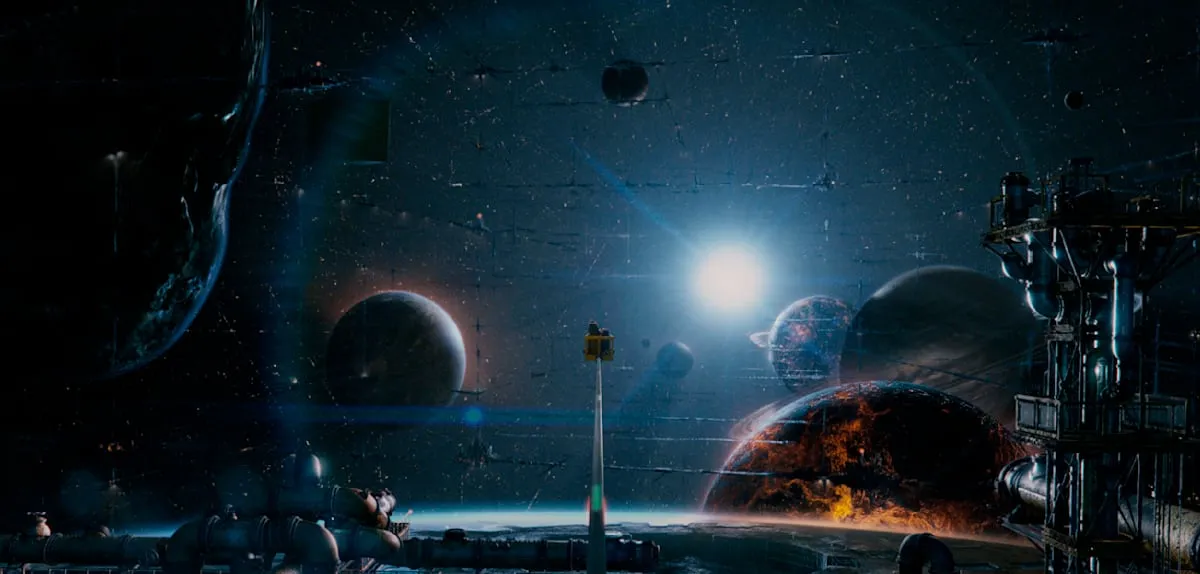
INNSBRUCK – On a cold, frustrating night in a field near Innsbruck, Austria, a penniless hitchhiker named Douglas Adams had an unexpected epiphany. Drunk and gazing at the starry sky, a vision for a science fiction book that would later become a global cult classic and even predict modern artificial intelligence (AI), began to form in his mind. This experience laid the foundation for his phenomenal work, The Hitchhikers Guide to the Galaxy.
Adams was stranded at the time, out of money during his journey. His situation was compounded by loneliness and difficulty communicating in an area where the majority of residents were deaf and mute, prompting him to seek solace in beer to overcome extreme boredom.
Under the influence of alcohol, feeling the ground beneath him spin, his mind wandered beyond conventional boundaries. The stars above Tirol became the canvas for his imagination, sparking radical ideas about the universe, existence, and future technologies that many had not yet conceived.
The concepts in The Hitchhikers Guide to the Galaxy were far ahead of their time. The book, first published as a radio series in 1978, described super-intelligent computers and digital entities with consciousness, long before the dominance of AI that we witness in 2026.
Adams' work not only became essential reading for science fiction enthusiasts but also influenced society's perception of technology and absurd humor. Its predictive power continues to amaze, especially in the context of today's accelerating AI development.
Adams' journey from a poor hitchhiker to one of the most influential writers in the science fiction genre is clear proof that inspiration can arise from the most unexpected situations, even amidst despair and confusion.
Many argue that the madness and confusion of that night opened the floodgates for brilliant ideas that might not have emerged under normal circumstances. This is a testament to the boundless power of the human mind and its adaptability.
In 2026, as AI technology becomes increasingly integrated into various aspects of life, from transportation to warfare, Adams' vision feels ever more tangible. He was an unwitting futurist whose work now serves as a mirror for modern reality.
Stories like this affirm the importance of science fiction as a medium to explore future potential and prepare us for new possibilities, both fantastic and frightening.
That a monumental work was born out of boredom, despair, and a few beers in the mountains of Tirol makes for a fascinating anecdote in the history of modern literature, one worth remembering.
The Hitchhikers Guide to the Galaxy has been adapted into various media, including television, film, and even video games, proving the universal appeal of its story across generations and cultures.
Editorial Insight:
Douglas Adams' eureka moment in Innsbruck is more than just an intriguing story about a book's origin; it is a reflection of how creativity often blossoms at the intersection of chaos and reflection. Adams' ability to envision an AI-driven future, long before such technology became a reality, positions him as a true visionary. Amidst the flurry of technological innovation in 2026, we are reminded that the greatest ideas often stem from the most unconventional perspectives, transforming personal moments into a global legacy.