 Angela Stefani
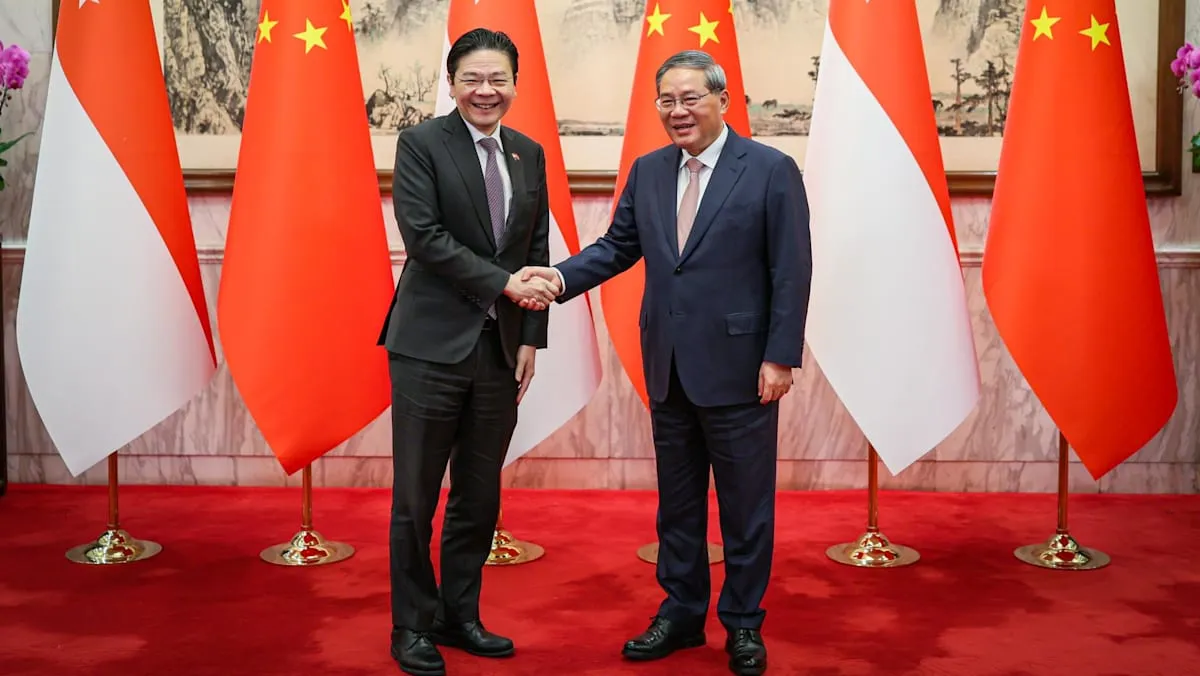
SINGAPORE – Prime Minister Lawrence Wong stated in 2026 that Singapore possesses significant maneuvering room to continue doing business with both the United States and China, despite the increasingly inevitable prospect of economic bifurcation between the two global powers. This declaration comes in response to an increasingly complex geopolitical landscape, where Singapore strives to maintain its role as a vital trade and investment hub in Southeast Asia. Wong underscored a crucial condition: as long as Washington and Beijing do not engage in direct military confrontation, economic opportunities for the city-state will remain wide open.
Prime Minister Wong's comments reflect a reality faced by many smaller nations, particularly in Asia, caught in the tug-of-war of hegemonic rivalry between the world's two largest economies. Singapore, with its strategy rooted in neutrality and economic openness, has historically benefited from strong relationships with both sides. However, escalating tensions, especially concerning trade, technology, and regional security, demand a more cautious approach.
The bifurcation mentioned by PM Wong refers to a systemic separation or divergence in supply chains, technology standards, and even financial systems, driven by protectionist policies and strategic competition between the US and China. This phenomenon, if not properly managed, has the potential to split the global economy into two opposing blocs, presenting significant challenges for nations reliant on market integration.
Nevertheless, Wong remains optimistic that Singapore can maintain its position as an economic bridge. The nation's approach involves diversifying trade partners, strengthening domestic capabilities, and emphasizing multilateral rules based on international law. The key is ensuring flexibility and adaptability to dynamic changes in the global order.
Singapore also recognizes the importance of ASEAN's role as a cohesive regional bloc. A united ASEAN with a collective voice can serve as a more effective counterbalance against pressure from major powers, while also creating a stable environment conducive to trade and investment. Regional collaboration is fundamental to safeguarding shared interests.
Regional stability is a primary prerequisite, was the core message from PM Wong. He emphasized that prospects for economic cooperation endure, provided geopolitical tensions do not exceed the tolerance threshold for conflict.
This condition applies not only to Singapore but also to many Southeast Asian nations that maintain close economic ties with both the US and China. Strategic balance is crucial. Regional geopolitical upheavals, such as tensions in the South China Sea or the Taiwan issue, could significantly disrupt trade routes and global supply chains.
This situation is reminiscent of other geopolitical challenges threatening global stability, such as oil and geopolitical turmoil threatening crucial climate agreements or tensions between Iran and the United States under President Donald Trump's leadership. All these situations underscore the fragility of the global order and the importance of diplomacy.
Amidst this uncertainty, global markets in 2026 continue to seek stability. Singapore, as one of the world's most open economies, will continue to prioritize policies that attract foreign investment and facilitate trade, ensuring that companies can operate efficiently without being hampered by drastic geopolitical shifts.
Technology is also a major battleground in the US-China bifurcation. Singapore invests heavily in innovation and research to develop its own digital capabilities, reduce reliance on a single power bloc, and ensure that local tech industries remain competitive in a fragmented global market.
Editorial Insight: Prime Minister Wong's statement is a realistic reflection of the dilemma faced by smaller nations in an era of global polarization. Singapore's ability to navigate the US-China bifurcation will serve as a benchmark for many other countries hoping to maintain economic growth amidst geopolitical upheaval. The challenge lies in finding the right balance between economic engagement and safeguarding strategic sovereignty without being drawn into either pole. Singapore's success will heavily depend on diplomatic agility and courage in making strategic economic decisions, especially amidst potential global economic shocks caused by trade and technology rivalry.