 Stefani Rindus
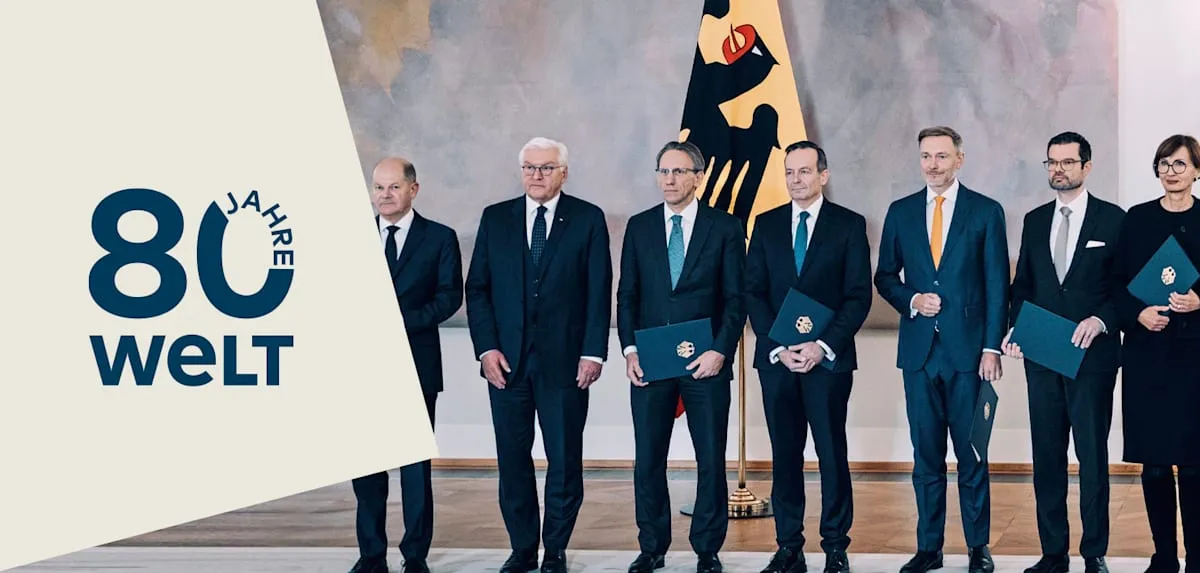
Berlin — In a retrospective presented as part of the “80 Years of WELT” series, the public is once again reminded of a crucial moment that shook Germany's political landscape in 2024. The ambitious Ampel coalition, formed by the Social Democratic Party (SPD), the Greens, and the Free Democratic Party (FDP), ended prematurely amidst fierce internal disputes. This event not only shattered the foundations of the government but also dragged some of the nation's most influential political figures into a whirlpool of uncertainty.
The crisis culminated in a sharp statement from the Chancellor at the time, an ultimatum that altered the course of German political history. The phrase, "Then, dear Christian, I do not want you to remain a member of my cabinet," effectively marked the end of the fundamental modernization experiment initiated by the coalition. This declaration symbolized an irreparable rift between the party leaders.
The Ampel coalition, named after the colors of its constituent parties (red for SPD, green for the Greens, yellow for FDP), was initially expected to bring a wave of progressive reforms. Its primary goals included rapid energy transition, comprehensive digitalization, and ambitious fiscal reforms. However, deep ideological differences and contrasting priorities began to create friction from the very beginning of their term.
Financial tensions became one of the main triggers. The FDP, under the leadership of Christian Lindner, who was then Finance Minister, insisted on budget discipline and debt reduction. In contrast, the SPD and the Greens tended to favor larger public spending for social and environmental investments, often leading to heated debates over budget allocation and tax policies.
Disputes were not confined to policy levels; they also touched personal aspects among ministers and party leaders. Discussions that should have been constructive often turned into heated arguments, eroding trust among cabinet members and revealing the vulnerability of their power structure. These moments were clearly documented in national media archives, including extensive coverage by WELT.
As part of its 80th-anniversary series, WELT re-examines how this promising coalition ultimately failed. The events of 2024 demonstrate that a grand vision for Germany's modernization was not strong enough to bridge the deeply rooted ideological divides among three vastly different parties. This serves as a critical lesson for future coalition government formations.
The dissolution of this coalition triggered a chain reaction across Europe. Political analysts from various countries highlighted the implications of German stability for the European Union. The temporary power vacuum and the need for new snap elections raised concerns about legislative stagnation and economic uncertainty at a time when the world faced numerous global challenges.
Christian Lindner, who served as the FDP's Finance Minister in 2024, became one of the figures most directly affected by the Chancellor's decision. Although he had long been the face of the liberal party in German politics, the dismissal incident significantly altered the trajectory of his political career. This illustrates how personal and decisive political choices can be at the highest levels.
The period following the coalition's collapse was marked by intense political maneuvering. Parties sought to form new alliances or prepare for inevitable snap elections. Political observers, including columnists at WELT, underscored the long-term impact on public trust in often-fragile coalition government systems.
This incident in Germany also resonated in other countries facing coalition formation challenges. For instance, the related article "Waves of Protest Rock the Union: Kanzler Merz's Political Career on the Brink?" illustrates similar political dynamics, where governmental stability issues are always a primary focus.
This retrospective, two years after the event, offers a clearer perspective on what went wrong and what lessons can be learned. It is not merely a story of political failure but also a narrative about the complexities of modern governance amidst fundamental ideological differences and ever-increasing public pressure.