 Chandra Wijayanto
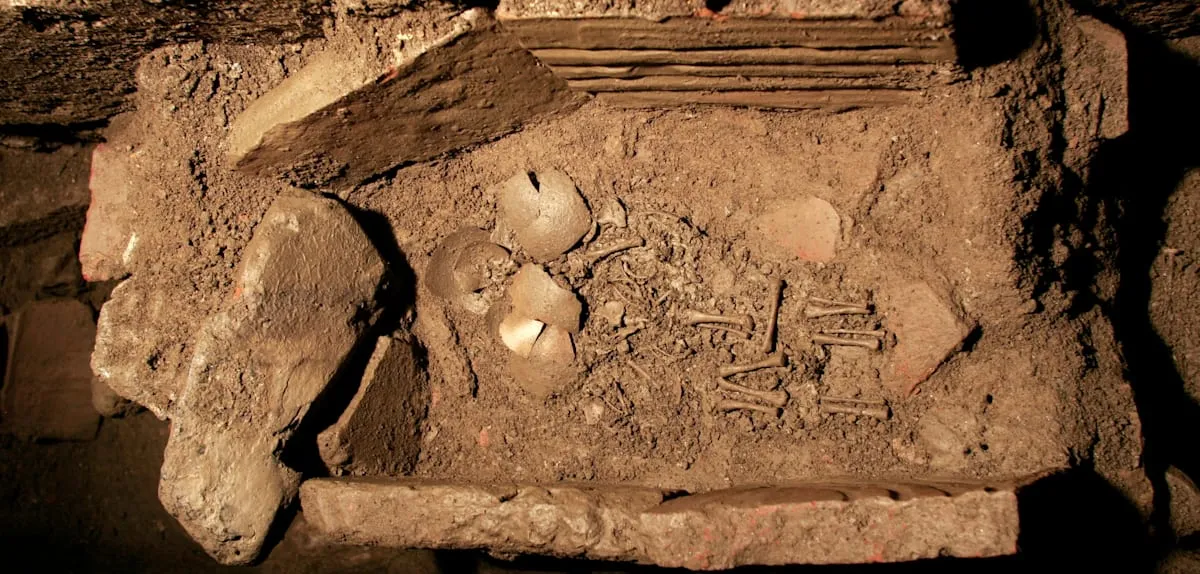
EPHESOS — A stunning archaeological discovery recently shook the scientific world when a research team uncovered the remains of two twin infants buried in an ancient latrine or wastewater channel at the historic site of Ephesos. This unusual finding, meticulously reconstructed by experts, is not merely a gruesome tale but rather reveals surprising practices of special care from ancient societies towards deceased children, challenging common perceptions of burial traditions of that era.
Archaeologists working in Ephesos, an ancient Roman city in what is now Turkey, confirmed the identification of the remains as two twin infants. Deep excavations in the city's sanitation system area unearthed small boxes used as graves, an anomaly that immediately captured the research team's attention.
The unusual location of the discovery—a communal latrine—initially led to speculation about neglect or abandonment. However, careful forensic analysis and archaeological context instead pointed researchers to a contradictory conclusion: a profound form of care.
This research was led by a team of experts from the Austrian Archaeological Institute (ÖAI), long dedicated to the Ephesos site. They utilized advanced reconstruction methods to analyze the material surrounding the remains, including remnants of fabric and small artifacts accompanying them, providing crucial clues about the conditions at the time of burial.
Professor Sabine Ladstätter, director of the ÖAI, stated, "Initially, we were surprised by the location of the find. However, small details from the analysis revealed that this was not mere disposal, but a deliberate act, likely imbued with profound sadness. It suggests an effort to provide a 'resting place' for the twins, albeit in an unconventional location."
Researchers suggest that burial in the latrine might have been an attempt to conceal the death of the twin infants from public view, possibly due to social stigma or certain beliefs. In that period, infant mortality rates were extremely high, and twin births were sometimes considered an ill omen.
Nevertheless, the placement of the bodies in separate boxes, even with remnants of fine fabric wrapping them, indicates that this act was carried out with ritual or a personal touch. This was not merely disposal into a sewer, but a "hidden burial" performed with care.
Further studies will investigate the bone composition to determine the infants' precise age at death, as well as potential causes of death. This data is expected to provide a more comprehensive understanding of infant health and nutrition in the ancient Roman era.
This discovery opens a new window into the complexity of emotions and social practices in the ancient world. It highlights that even in difficult and limited circumstances, human values and compassion might still find their way, even if through methods that appear tragic to modern eyes.
Modern archaeology continuously challenges established historical narratives, and this Ephesos discovery is concrete proof that our past is far more nuanced than we often imagine. The story of the twin infants buried in the ancient latrine will be a significant reference in future forensic anthropology and social history studies.