 Debby Wijaya
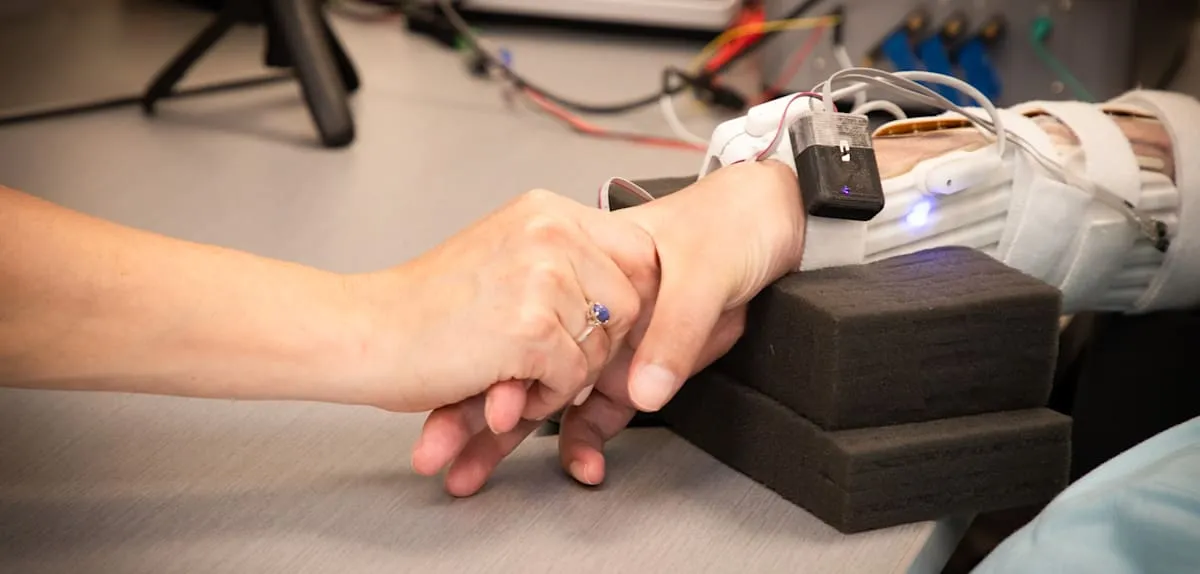
UNITED STATES – A man suffering from complete paralysis, Keith Thomas, has reportedly regained the ability to grasp objects and even feel sensations, a medical breakthrough potentially revolutionizing spinal cord injury treatment. This extraordinary achievement in 2026 was made possible through advanced “neuronal bypass” technology developed by a team of scientists at a leading neurological research center. This innovation creates a digital bridge between the brain and limbs with severed nerve connections, opening new hope for millions globally suffering from paralysis.
Previously, Thomas lived with severe paralysis following a tragic accident years ago, which severed vital neural communication pathways between his brain and lower body. This condition left him completely devoid of motor and sensory functions, making his case one of the most challenging in medical science.
This neuronal bypass technology is not merely an assistive device but a complex system designed to directly overcome biological barriers. Researchers describe it as one of the biggest leaps in the field of neuroprosthetics, given its ability to restore body functions previously considered permanently lost.
The system works by recording electrical signals from Thomas's brain when he intends to perform a certain movement. These signals are then processed by a sophisticated computer that converts them into digital commands. These commands are subsequently sent directly to the muscles in his arm, connected via neural implants, enabling him to move his hand and fingers. Furthermore, specialized sensors on Thomas's limbs can also transmit sensory feedback to his brain, restoring the sensation of touch.
Thomas's recovery did not stop there. The most astonishing moment occurred after several months of use, when researchers decided to deactivate the neuronal bypass device. Unexpectedly, Thomas was still able to feel some sensations and even perform limited movements without active assistance from the system.
This phenomenon, described by scientists as “a miracle beyond expectation,” demonstrates remarkable brain plasticity and the ability of nerves to form new connections, albeit indirectly. It offers new insights into the potential for natural recovery that can be triggered by technological intervention.
This monumental research was led by Dr. Elena Petrova, a prominent neurologist, along with her team at the Advanced Neurology Institute in California. They have dedicated over a decade to understanding and restoring damaged nerve functions, focusing on brain-computer interfaces and neural stimulation.
Thomas's success offers an unprecedented glimmer of hope for individuals worldwide living with spinal cord injuries or similar neurological conditions. The potential to restore mobility and sensation could drastically improve their quality of life, reduce dependence on assistive devices, and open doors to greater independence.
Nevertheless, the widespread implementation of this technology still faces various challenges, including high development costs, the complexity of surgical procedures, and ethical considerations related to integrating technology into the human body. Discussions regarding accessibility and long-term implications continue among the scientific and medical communities.
Researchers are also exploring the potential of neuronal bypass for other applications, such as helping stroke patients regain motor function, addressing degenerative neurological disorders, or even enhancing cognitive abilities. The field of neuroprosthetics continues to advance rapidly, promising a new era in treatment and rehabilitation.
Dr. Petrova stated, "What we witnessed in Keith Thomas is not just about restoring physical function, but also about proving the incredible resilience of the human brain. This is the beginning of a long journey toward a future where paralysis may no longer be a lifelong sentence." Further research will focus on refining the technology, miniaturizing devices, and deeper exploration of natural nerve recovery mechanisms.