 Chris Robert
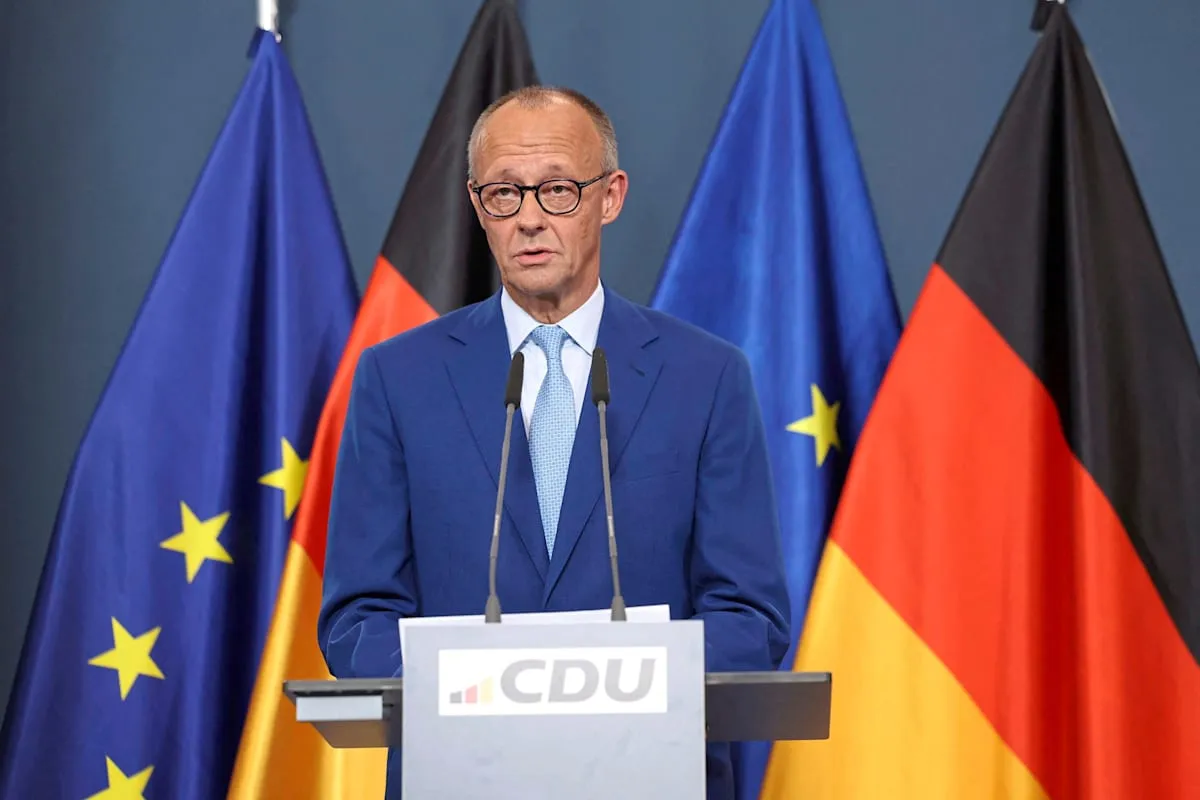
BERLIN – German Chancellor, Merz, reaffirmed his commitment to continue the government's reform agenda, even after the Christian Democratic Union (CDU) suffered poor results in state elections in Mecklenburg-Vorpommern and Berlin. Merz stated that these reforms are the 'antidote to authoritarian poison' increasingly threatening democratic stability. This statement was delivered in early 2026, highlighting the urgency of political action amidst domestic and regional turmoil.
The political situation in Germany post-state elections indeed creates a challenging landscape for the CDU. Significant losses in these two key regions raised questions about the party's direction and Merz's leadership. However, the Chancellor firmly refused to change course, emphasizing that the response to these results must be one of steadfastness.
Merz specifically outlined that the ongoing reforms are not merely routine policies, but fundamental efforts to strengthen democratic structures and civil liberties. He described the 'authoritarian poison' as a latent threat that could undermine the foundations of society, demanding the government to act proactively and boldly.
'What needs to be done now requires backbone, steadfastness, and patience,' Merz was quoted as saying. The emphasis on these qualities indicates that the Chancellor recognizes the difficult challenges facing his party and the country. This is not a sprint, but a political marathon requiring endurance.
The CDU party faces significant pressure following the unsatisfactory election results. In Mecklenburg-Vorpommern, the dominance of other parties delivered a major blow. Similarly, in the Berlin 2026 Elections, public sentiment showed an unfavorable shift for the conservative party.
Nevertheless, Merz views these setbacks as an impetus to accelerate reforms, not to delay them. For him, the disappointing election results only clarify the importance of upholding liberal democratic values in the face of populism and increasingly strong authoritarian narratives across various parts of the world.
The reforms in question cover various sectors, from economy, social, to security. The goal is to create a more resilient Germany against external and internal influences that could undermine its political system. Merz believes that only with strong foundations can the country resist the temptations of authoritarianism.
Some political observers see Merz's statement as an attempt to re-unite his support base and send a strong message to the opposition. This is a declaration that he will not be deterred by criticism, but will continue with a clear vision, even if the path ahead is full of obstacles.
The threat of 'authoritarian poison' is not a new phenomenon, but Merz's contextualization draws attention. In recent years, Europe has indeed witnessed the rise of parties with agendas that tend to restrict civil liberties and erode democratic norms. Merz's statement could refer to this broader political trend.
The German government under Merz's leadership is committed to:
- Strengthening democratic institutions.
- Protecting civil rights and freedom of expression.
- Increasing public participation in policy processes.
- Combating disinformation and extreme polarization.
These measures are considered crucial for maintaining the country's political integrity.
Naturally, continuing reforms amidst poor election results requires careful communication strategy and strong political negotiation skills. Merz must be able to convince both his party internally and the wider public that the chosen direction is for Germany's long-term interests.
Conversely, the opposition will likely use these election results to pressure the government. They will demand accountability for the CDU's losses and question the effectiveness of the proposed reforms. This will be a tough test of leadership for Merz.
Editorial Insight: Chancellor Merz's statement illustrates the complex internal political dynamics of Germany, where regional election results often spark debates about national direction. His steadfastness in combating 'authoritarian poison' reflects an awareness of global trends threatening democracy. However, the effectiveness of these reforms will heavily depend on Merz's ability to build consensus and prove that firm leadership can turn challenges into opportunities, not merely rhetoric.