 Chris Robert
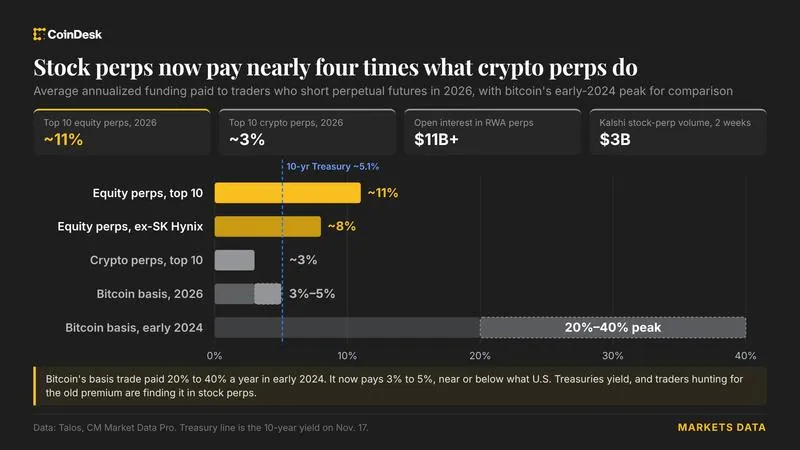
JAKARTA – The global crypto market is once again shrouded in uncertainty in mid-2026. Bitcoin, the largest digital asset by market capitalization, remains stagnant around the $65,000 mark. This condition comes alongside a surprising report from Talos, indicating that the basis trade, a highly favored hedging strategy among investors, now offers returns comparable to US government bonds or Treasuries.
This minimal fluctuation immediately sparked concerns among market participants. Historically, the basis trade has been a cornerstone for many institutions and large investors to achieve stable profits amidst the inherent volatility of crypto assets.
The Talos report, from a leading digital asset trading technology firm, explicitly highlights a drastic decline in profit margins from the basis trade strategy. Returns now comparable to Treasuries, traditionally considered low-risk investments, signal a fundamental shift in crypto market dynamics.
The basis trade involves buying Bitcoin in the spot market while simultaneously selling futures contracts with a further expiration date. The price difference between spot and futures, known as the basis, typically offered a positive and profitable arbitrage.
However, as detailed in the Talos report, this basis premium has now significantly narrowed. This means the room for investors to lock in risk-free profits is shrinking, forcing them to re-evaluate their capital allocation strategies.
This phenomenon is influenced by several factors, including increased market efficiency, greater institutional participation, and possibly tighter global monetary policies, although Treasury yields remain relatively low amid controlled inflation this year.
Despite Bitcoin's stagnation, some other crypto assets are moving positively. XRP, the cryptocurrency associated with Ripple, is observed nearing the $1 level. Meanwhile, Solana (SOL) also recorded an increase of about 3% in its latest price movement.
This rise in XRP is particularly interesting, especially considering a whale maneuver involving 4 trillion IDR worth of XRP some time ago, which was interpreted as a long-term custody indication rather than a sell-off. This suggests that specific narratives for altcoin assets can still attract investor interest.
The divergent movements between Bitcoin and prominent altcoins like XRP and SOL highlight the diversification of investor interest in the crypto market. When Bitcoin tends to move sideways, attention often shifts to altcoins that offer higher potential returns, albeit with greater risk.
Market analysts anticipate that if this unfavorable basis trade trend continues, investors may seek opportunities in other segments of the crypto market, such as decentralized finance (DeFi) or non-fungible tokens (NFTs), or even revert to traditional investment instruments offering similar stability.
Bitcoin's stagnation at the $65,000 level underscores the crypto market's challenge in finding new catalysts. Without significant impetus, either from new institutional inflows or favorable regulatory developments, prices may continue to fluctuate within a tight range.
Editorial Insight: The dwindling profitability of the basis trade is a significant indicator that the crypto market, particularly Bitcoin, may be entering a more mature consolidation phase. The allure of simple arbitrage is diminishing, pushing investors towards more in-depth analysis and complex strategies. This could signal the market's evolution towards higher efficiency, simultaneously demanding adaptation from market participants to remain competitive.