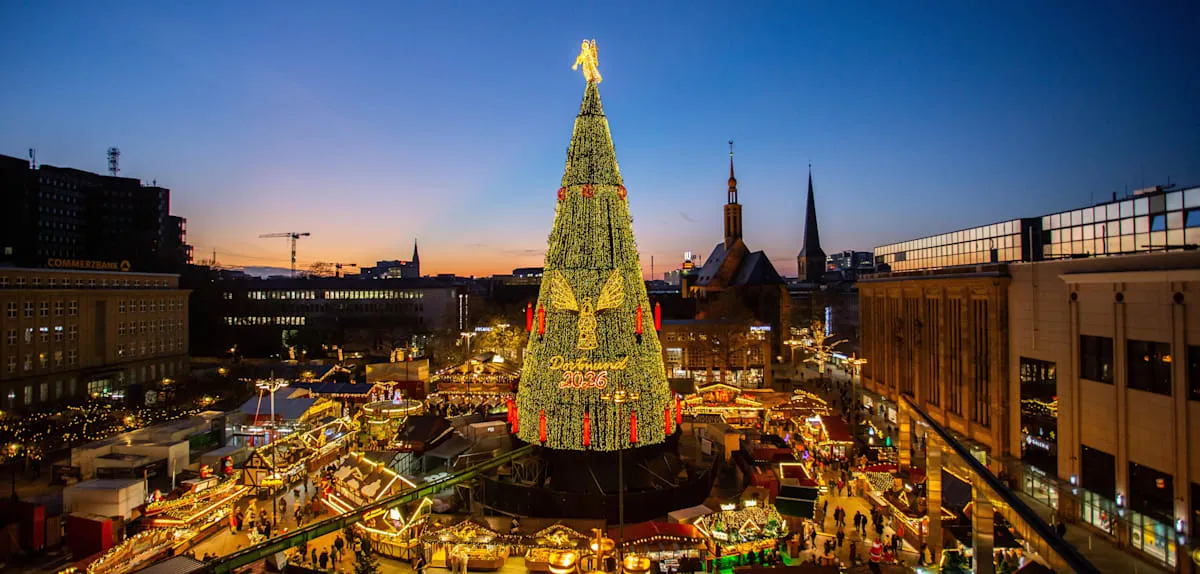
ROSTOCK – A heated debate concerning Christmas tree quality engulfs Germany as the 2026 year-end celebrations approach. From the coastal city of Rostock to Balingen and Esslingen in the south, the public and media extensively highlight the phenomenon of ugly Christmas trees deemed unsuitable for aesthetic and traditional standards. This concern, centered on the dominance and characteristics of the Nordmann fir, sparks deep reflection on public expectations and market realities.
The controversy stems from numerous reports by citizens disappointed with their purchased Christmas trees. Common complaints include asymmetrical shapes, sparse branches, easily shedding needles, and disproportionate sizes. The image of an ideal Christmas tree, deeply embedded in German culture, appears unrepresented by this year's supply.
The core of this issue points to the Nordmann fir, a spruce variety that has been the primary choice for Germans for decades. Known for its sturdy needles and robust shape, the Nordmann fir is now under scrutiny for its varying quality. Questions arise: is the problem rooted in cultivation processes or in the public's increasingly high expectations?
This wave of dissatisfaction is not confined to family discussions but also extends to social media and online forums. Thousands of uploaded photos of ugly Christmas trees have gone viral, sparking fierce debate about what truly constitutes a good Christmas tree. National media have also picked up the issue, making it a hot topic as the year concludes.
Fundamentally, this phenomenon reflects the Wirkmacht deutscher Unzufriedenheit – a characteristic German power of dissatisfaction, as elucidated by philosopher Immanuel Kant. This is not merely about tree aesthetics but also about precision, order, and the fulfillment of high expectations, values deeply ingrained in German culture. Society expects perfection, and when reality falls short, dissatisfaction arises.
Conversely, there is also the Pragekraft der Nordmanntanne or the pervasive influence of the Nordmann fir. This variety has dominated the market for so long that it has shaped the ideal image of a Christmas tree in many people's minds. When the supply is inconsistent, or perhaps farmers face climatic or pest challenges in previous years, the impact on public perception is immediately felt.
Although seemingly trivial, this debate could slightly perturb the seasonal market. Christmas tree vendors, especially small-scale ones, face challenges in meeting increasingly critical consumer expectations. Some parties are beginning to suggest diversifying tree types or educating consumers about the natural variations of the product.
This issue also indicates a shift in public preferences or at least standards. Amidst global dynamics and complex issues like the threat of the 2027 EU budget or fluctuations in German political popularity in 2026, even the matter of Christmas trees does not escape sharp scrutiny.
A Christmas tree is more than just a decoration; it is a symbol of hope, togetherness, and cherished tradition in Germany. Its quality reflects the seriousness with which these values are maintained. Therefore, this debate goes beyond ugly trees to become a reflection of a nation deeply concerned with detail and perfection.
While the 2026 Christmas celebrations will undoubtedly remain vibrant, this Christmas tree crisis serves as a reminder that even in the most established traditions, expectations and reality often clash, sparking unavoidable discussions within modern society.
Editorial Insight: This Christmas tree controversy in Germany, though seemingly unique, actually represents the tension between cultural idealism and commercial reality. It highlights the perfectionist and critical nature of German society, even towards the smallest details of celebration. It is a reminder that public sentiment can be stirred by even the most fundamental and symbolic aspects of daily life.