 Angela Stefani
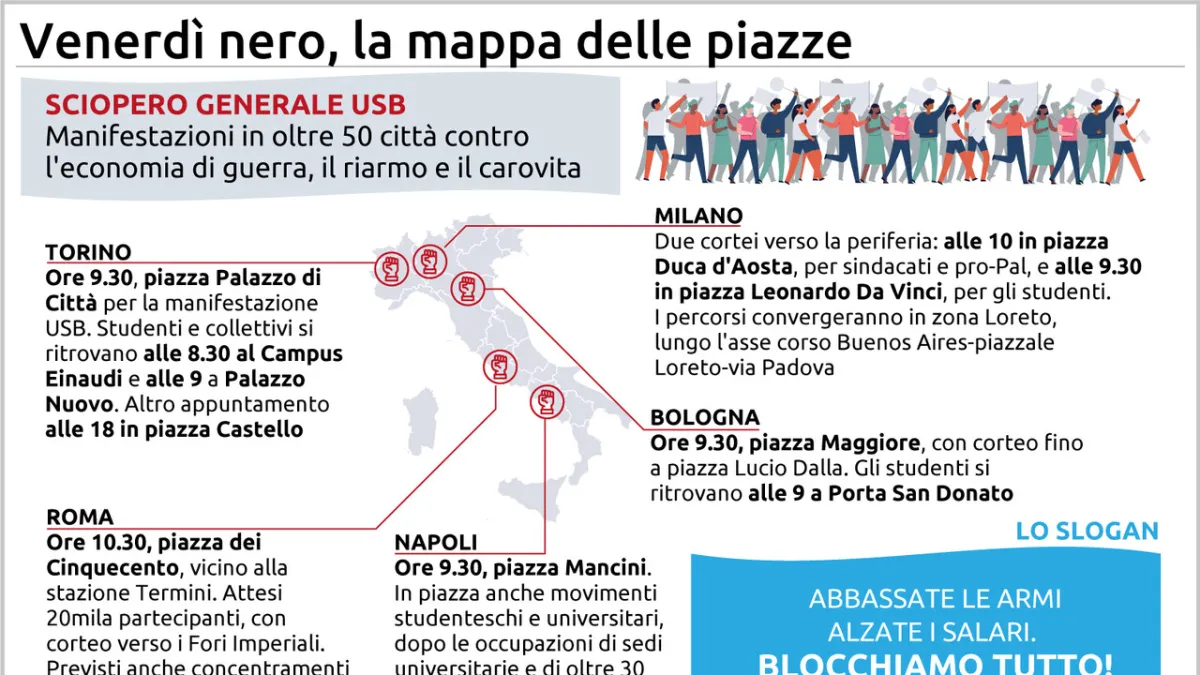
ROME – Friday, March 20, 2026, bore witness to a colossal wave of strikes and mass demonstrations engulfing over 50 cities across Italy. Thousands of individuals from various societal strata, ranging from trade unionists demanding economic justice to students and pro-Palestinian activists advocating for global solidarity, poured into the streets. This movement, dubbed Black Friday, led to significant paralysis in public transport and other essential services, sparking concerns over social stability amid volatile national and international political dynamics.
These coordinated protests were organized by a consortium of major labor unions alongside student groups and civil society organizations. They articulated urgent demands reflecting deep dissatisfaction with current government policies and socio-economic conditions. Issues such as uncontrolled inflation, stagnant wages, and threats of public service budget cuts formed the core of the collective anger.
In the capital, Rome, thousands of demonstrators filled Piazza Venezia, proceeding towards the Colosseum, calling for the government to be more responsive to the needs of the people. Banners reading Decent Wages, Prosperous Life and Stop Budget Cuts dominated the human tide. Security forces were on high alert to secure the protests that began early in the morning.
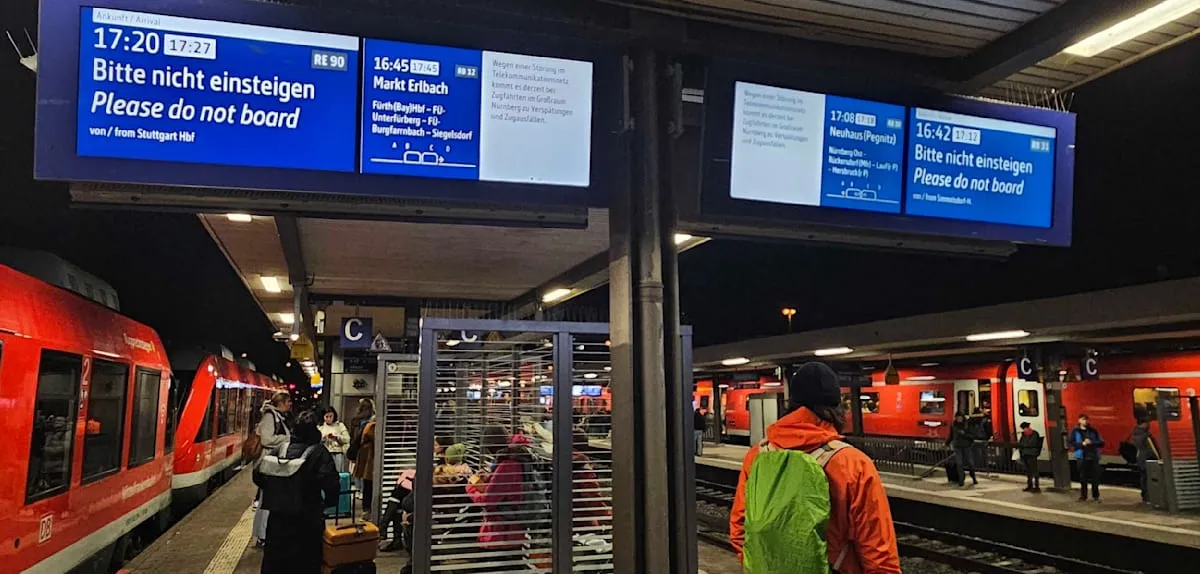
Meanwhile, Milan faced similar disruptions. Activity in Italy's financial hub was severely hampered by a mass strike of transport workers. Train, tram, and bus services ceased, forcing residents to seek alternative travel or work from home. Labor unions highlighted employment agreements deemed unfair and a lack of investment in public infrastructure.
The wave of protests also spread to other cities such as Naples, Turin, Palermo, and Bologna. In each location, local dynamics blended with national issues. For instance, in southern Italy, youth unemployment was more prominent, while in the north, concerns over industrial competitiveness were paramount.
One of the critical demands echoed in every protest was for improved economic conditions for workers. Conflicts over tax policies and workers' rights often triggered these demonstrations. Italian workers continue to struggle with rising living costs while wages remain stagnant. This is no longer about profit, but about preserving dignity, stated a trade union representative in Florence, referencing the heated debate over Italy's tax policies.
Geopolitical issues also played a central role. Many demonstrators, especially students and activists, voiced strong support for the Palestinian people, a sentiment also reflected in the case of five Italian citizens detained in the West Bank. Large banners proclaiming Free Palestine were prominently displayed among the crowds, uniting domestic demands with global concerns.
Here are some major cities significantly impacted by the strikes and demonstrations:
- Rome: Political center, public transport disrupted, mass demonstrations in the city heart.
- Milan: Financial hub, transport services totally paralyzed, industrial worker actions.
- Naples: Youth unemployment and regional development issues were protest focal points.
- Turin: Automotive industry threatened by strikes, students demanding education reform.
- Palermo: Solidarity with social issues in Southern Italy.
- Bologna: Educational center, students actively voicing global and local issues.
Similar actions have occurred previously, but the scale and intensity of this 2026 Black Friday indicate a significant escalation. Protest coordinators affirmed this as a strong warning to the government not to ignore the voice of the people. They insisted that if demands are not met, a larger wave of protests could potentially follow.
The Italian government, through its spokesperson, stated its respect for citizens' right to express aspirations. However, they also urged that actions be conducted in an orderly manner and not disrupt public order. Several officials promised to review the demands of trade unions and students, although no concrete commitments have been made.
Political observers noted that these demonstrations also reflect the increasingly sharp polarization within Italian society. The cost of living crisis, social inequality, and geopolitical tensions create fertile ground for easily ignited public dissatisfaction.
The economic impact of these strikes is estimated to be quite significant, especially in the retail, tourism, and logistics sectors. Financial losses due to halted activities are projected to reach millions of euros. Businesses urged the government and unions to promptly reach a solution to avoid further losses.
Many hope that the government and unions can soon come together to find common ground. Constructive dialogue is considered the only path to de-escalate tensions and prevent a more severe escalation, which could potentially destabilize national stability.
Editorial Insight: Black Friday in Italy in 2026 is more than just a display of power by unions or students; it reflects an accumulation of public dissatisfaction across various layers. With demands ranging from domestic economic issues to geopolitical concerns like Palestine, the government stands at a crossroads. Failure to seriously address these aspirations could trigger broader waves of instability, potentially altering Italy's political and social landscape in the long term. The nation's economic stability and social cohesion will largely depend on a judicious response from its leadership.