 Stefani Rindus
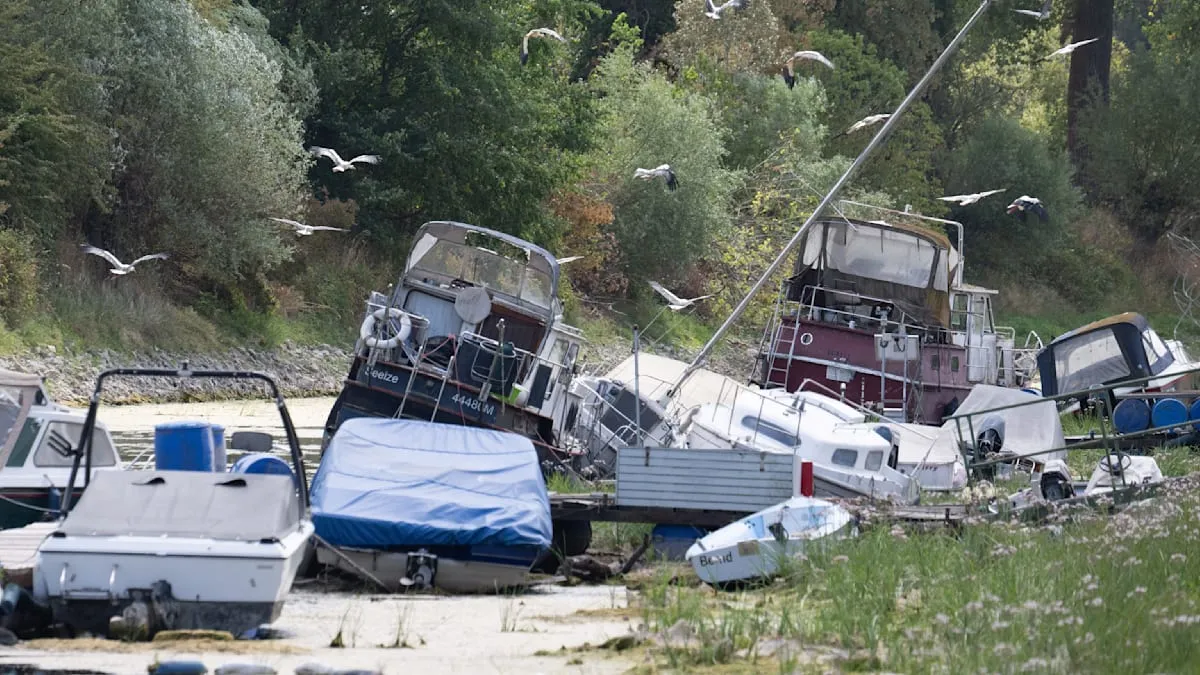
FRANKFURT – The water level of the Rhine River in Germany has reached a historic low in 2026, triggering a serious alarm for industries across Europe. This critical situation has forced several companies, including chemical giant Covestro, to implement production restrictions. The threat of supply chain paralysis now looms over the regional economy, exacerbated by an already overloaded railway network.
The drastic drop in water levels hampers the navigation of cargo ships, which serve as the backbone of logistics transportation for many sectors. Vessels can only carry a fraction of their normal capacity, significantly slowing down the delivery of raw materials and finished products.
Matthias Roser, spokesperson for the German Federal Association for Inland Navigation (Bundesverband der Deutschen Binnenschifffahrt), emphasized the severity of the crisis. The rail network cannot take on this entire burden, as our rail system is already chronically overloaded, he stated, highlighting the lack of effective alternatives. Similar issues regarding limited rail infrastructure have also been a focus in various parts of the world, as discussed in the article Global High-Speed Rail: Why America Still Lags Far Behind?.
The Rhine crisis is not merely a logistical problem but a fundamental threat to economic stability. Manufacturing sectors, especially chemical, automotive, and energy industries, heavily rely on this waterway for smooth operations.
Global chemical company Covestro has confirmed production restrictions due to difficulties in supplying raw materials via the Rhine. This decision has the potential to trigger a domino effect on downstream industries that utilize Covestros products.
While fluctuations in Rhine water levels occur periodically, extreme conditions like those observed in 2026 are appearing more frequently in recent years, indicating broader climate change patterns. This phenomenon presents long-term challenges requiring serious adaptation.
To date, there has been no adequate long-term solution from the German government or the European Union to address the vulnerability of transportation infrastructure to extreme climatic conditions. The call for modernization and diversification of logistics is growing louder as the frequency of such events increases.
This crisis is reminiscent of similar challenges faced by several countries with vital rivers, underscoring the importance of climate disaster mitigation strategies for infrastructure. Without comprehensive planning, these vulnerabilities will continue to hinder economic progress.
With the global economic outlook for 2026 filled with uncertainties, disruptions to vital supply routes like the Rhine will further exacerbate inflationary pressures and slow down growth. Central banks and international financial institutions are beginning to incorporate climate risks as a key factor in their economic analyses.
Economists and environmental experts are calling for serious investment in more resilient and climate-adaptive infrastructure, including the development of alternative routes and increased capacity for railway lines. Cross-sector and cross-border collaboration is deemed crucial to overcome these challenges.
Editorial Insight: The Rhine crisis is a stark reflection of the fragility of global logistics systems when confronted with intensifying climate anomalies. Over-reliance on a single mode of transportation, without adequate backup, creates a critical vulnerability for the economy. Governments and industries must urgently formulate long-term policies that include infrastructure diversification, investment in climate mitigation technologies, and cross-border collaboration to maintain the continuity of vital supply chains. Failure to adapt could lead to far greater economic consequences in the future.