 Chris Robert
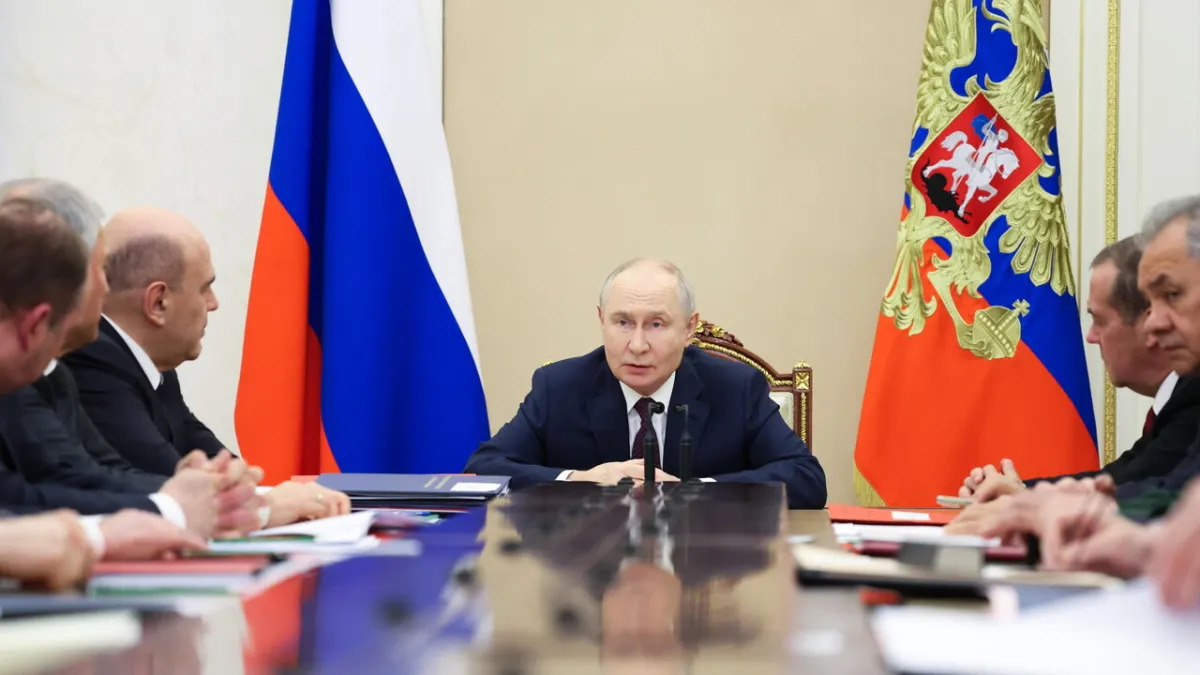
KYIV – A surprising report from the New York Times (NYT) in 2026 reveals a drastic proposal from Russia demanding NATO withdraw from its post-Cold War positions, retreating to geographical boundaries before 1997. This proposal, touted by the Kremlin as an attempt to restore a Warsaw Pact-style balance, has the potential to fundamentally alter the security architecture of Europe and Ukraine.
The internal document, which the NYT claims to have obtained, outlines Russia's vision for reshaping the continent's security landscape. Key demands involve the withdrawal of NATO forces from territories that were formerly part of the Warsaw Pact, specifically Poland and the Baltic states: Estonia, Latvia, and Lithuania. Moscow argues that the Cold War map, prior to NATO's eastward expansion, guaranteed stability and equilibrium that has now collapsed.
It is crucial to understand the historical context of these demands. In 1997, NATO had not yet included former Soviet bloc countries. The eastward expansion, beginning in 1999 with the accession of Poland, Hungary, and the Czech Republic, and continuing until 2004 with the Baltic states, is seen by Russia as a direct threat to its security.
Geopolitical observers view this proposal as more than just a diplomatic maneuver. It is a tangible effort by Russia to redefine its sphere of influence, challenge Western hegemony in Eastern Europe, and effectively create a wider buffer zone along its western border.
The implications for Ukraine are highly significant. The ongoing conflict in the region serves as the primary stage for this struggle for influence. If NATO withdraws from its pre-1997 positions, it would weaken the alliance's stance near Ukraine, potentially paving the way for greater Russian pressure.
Russia's demands also evoke the bitter memory of the Warsaw Pact era, a military alliance of Eastern European communist states dominated by the Soviet Union. The model proposed by Russia effectively seeks a return to clear spheres of influence, similar to a period widely considered one of the most dangerous in modern European history.
Initial reactions from Western capitals are expected to firmly reject this proposal. NATO, as a collective defense alliance, is founded on the principle of every sovereign nation's freedom to choose its own security pacts. A NATO withdrawal would mean abandoning commitments to its members, a scenario impossible to accept.
The threat to regional stability is becoming increasingly evident. The proposal has the potential to escalate tensions, prolong the conflict in Ukraine, and even trigger a new arms race in Europe. This move could also serve as a serious test for NATO's internal solidarity under the leadership of US President Donald Trump.
In recent years, discussions regarding territorial compromise for Ukraine's NATO membership have emerged. Earlier reports, such as US Urges Ukraine to Cede Territory for NATO Membership, indicated that such speculations are not new in diplomatic circles. However, Russia's current proposal is far broader, targeting the very foundation of NATO's presence in Eastern Europe.
This is not about border adjustments; its about reshaping the entire European security order that we have built since the fall of the Berlin Wall, an anonymous senior EU diplomat stated in response to the proposal.
Governments in Warsaw, Riga, Tallinn, and Vilnius are expected to voice the strongest opposition. Their NATO membership is the primary guarantee of their sovereignty after decades under the shadow of Soviet domination. For them, a NATO withdrawal would feel like a historical betrayal.
This situation places the international community at a crucial crossroads. The choices made by NATO and the West will determine the direction of global security for decades to come. Whether this is the beginning of serious negotiations or merely a Russian tactic to test the limits of Western alliance patience remains to be seen.
Editorial Insight:
Russia's proposal, though extreme, must be viewed as part of a larger, ambitious negotiating strategy. The Kremlin has consistently opposed NATO's eastward expansion, and these demands underscore its desire to restore geopolitical influence lost after the Cold War. While a complete NATO withdrawal to pre-1997 borders is highly unlikely, this proposal serves as leverage to force concessions in future security talks, particularly regarding Ukraine's status and NATO's military presence on Russia's borders. It is also a clear attempt to pressure NATO member states to rethink their alliances and commitments, hoping to sow internal divisions among them.