 Angel Doris
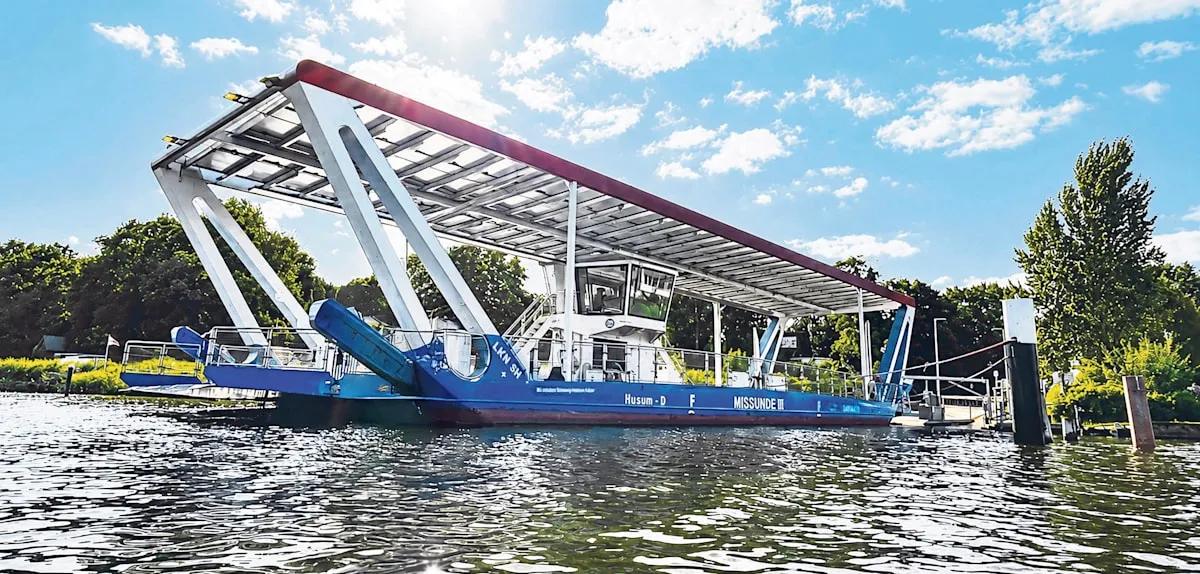
Schlei — Amidst Europe's innovation boom, a bitter irony unfolds in northern Germany. The Federal Government, despite vast financial outlays and zealous bureaucracy, has stumbled into a monumental failure to traverse the Schlei River, a mere 140 meters wide. The ferry project, intended as a vital connecting solution, has now become a symbol of state inefficiency in 2026.
This failure of a ferry project across a narrow stretch of river is not merely an ordinary infrastructure incident. It reflects the harsh reality of a nation that, according to many observers, appears to have lost its fundamental ability to execute simple projects. Billions of euros have been poured into a project that remains unfinished or functions suboptimally.
Local communities surrounding the Schlei River, particularly those who rely on this crossing for daily activities, are directly experiencing the stalled project's impact. Public frustration mounts as promises of improved accessibility remain unfulfilled, despite the pressing need for citizen mobility.
Public policy analyst, Professor Klaus Richter of the University of Hamburg, stated that the Schlei incident represents "the epicenter of systemic bureaucratic and managerial failure." He highlighted how regulatory complexities and overlapping authorities between agencies hinder project progress, even with ample budget allocation.
In-depth analysis reveals that the root cause does not lie in a lack of financial or technical resources. Instead, prolonged decision-making processes, repetitive feasibility studies without concrete results, and an inability to adapt to field challenges are the primary contributing factors.
Ironically, Germany, long known as Europe's economic powerhouse with advanced infrastructure, must now confront the fact that even a 140-meter bridge or ferry can become a major stumbling block. This incident has sparked a national debate on Germany's competitiveness and public administration efficiency.
The Schlei case is not isolated. In recent years, Germany has also faced similar challenges in other large-scale infrastructure projects, such as delays in airport construction and high-speed rail lines, despite ballooning budgets. This situation erodes public trust in the government's capabilities.
Amidst this situation, many parties are drawing comparisons to other logistical difficulties plaguing Europe. For instance, the logistics crisis due to the drying up of the Rhine River several years ago, as reported in the article "Dry Rhine: Hamburg Becomes Solution to Europe's 2026 Logistics Crisis?", illustrates the vulnerability of infrastructure on the continent, demanding agile handling. However, the Schlei case proves that problems can arise even without natural factors.
The Federal Government, through its spokesperson, has acknowledged "significant challenges" in the Schlei ferry project. They have promised a comprehensive evaluation and restructuring of project management. However, the public demands concrete actions and clear accountability, not just rhetorical promises.
Now, a big question hangs in the air: can Germany revitalize its capacity to execute public projects efficiently? Or will the "Schlei Ferry" become an eternal monument to bureaucratic failure, leaving a legacy of doubt over the foundations of state administration that have long been lauded? The future of German infrastructure efficiency is at stake.