 Robert Andrison
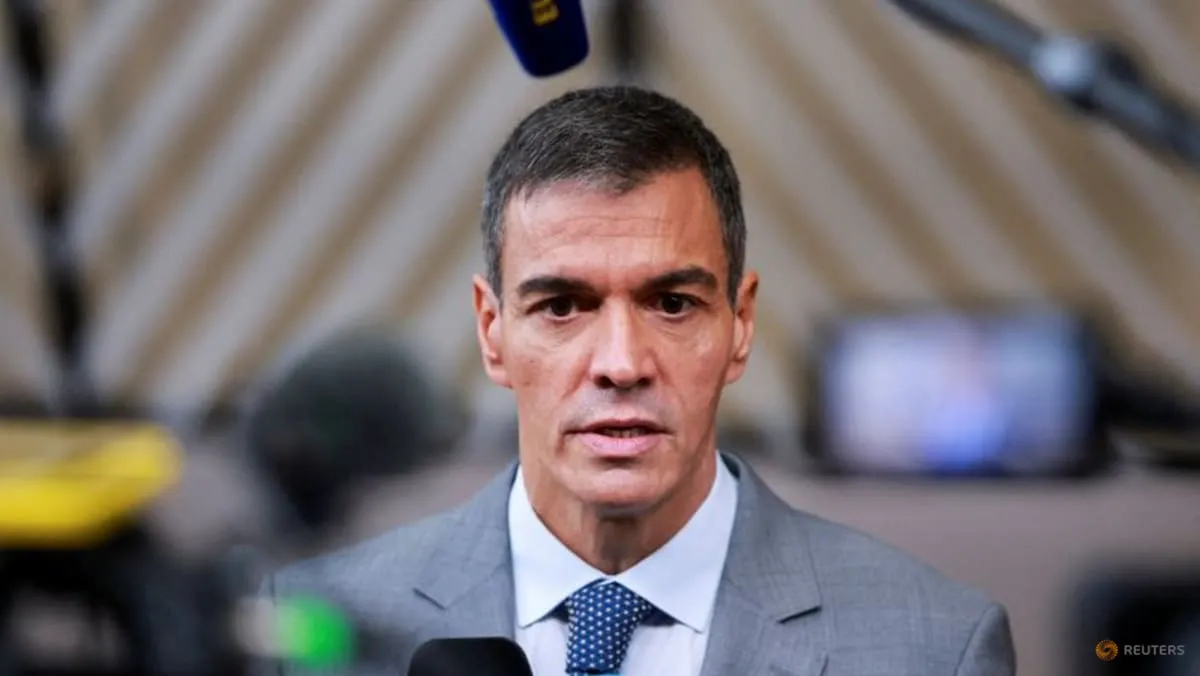
Madrid – Political fervor in Spain has reached its zenith leading up to the November 29, 2026 General Election. Incumbent Prime Minister Pedro Sanchez of the Spanish Socialist Workers Party (PSOE) engaged in a highly anticipated televised debate with his principal challenger, Alberto Nunez Feijoo, leader of the conservative People's Party (PP). This fierce exchange of arguments unfolded before millions of voters, poised to determine the future direction of the nation.
The crucial debate served as an arena for a battle of ideologies and development visions. Both leaders of Spain's largest parties sought to convince the public of their capacity to address the economic, social, and regional challenges afflicting the Mediterranean nation. The main focus of the debate included issues such as inflation, employment, and reforms to the social welfare system.
Pedro Sanchez, with his diplomatic style, highlighted his government's achievements in stabilizing the economy post-pandemic. He emphasized increased social spending, progressive policies related to civil rights, and Spain's commitment to strong European integration. 'We have proven that social progress and economic growth can go hand in hand,' Sanchez stated, underlining the social protection programs that have been implemented.
In contrast, Alberto Nunez Feijoo adopted an aggressive stance, sharply criticizing the government's fiscal policies, which he deemed wasteful and inflationary. The conservative opposition leader called for necessary structural reforms, bureaucratic streamlining, and an emphasis on budgetary stability. Feijoo promised tax cuts for businesses and individuals as an economic stimulus, while stressing the importance of national unity.
The issue of regional autonomy, particularly in Catalonia and the Basque Country, also became a point of contention. Sanchez defended his approach, which tends towards dialogue to ease separatist tensions, while Feijoo called for stricter enforcement of the constitution and a refusal to make any concessions to independence movements. These historical tensions re-emerged as a key determinant of votes in several crucial regions.
Political analysts viewed this debate as the last opportunity for both candidates to shift electoral dynamics. Recent polls indicated a tight race, with the possibility of a hung parliament or a fragile coalition government. Every sentence, every gesture during the debate was closely scrutinized by the media and prospective voters.
Topics of energy and climate change also received significant attention. Sanchez promoted ambitious investments in renewable energy and a green transition, aligning with European Union targets. Feijoo, on the other hand, emphasized the need to ensure national energy security, not ruling out more affordable traditional energy options to alleviate the public's cost of living.
The employment sector also proved to be a heated topic. Prime Minister Sanchez boasted about declining unemployment figures and flexible labor market reforms. Feijoo countered, asserting that these reductions were superficial and did not create sustainable, quality jobs for Spain's youth.
National media observers noted that this debate was more personal and heated than previous encounters. Both sides attacked each other's track records and credibility, reflecting the escalating political tension heading into Election Day. Speed and sharpness of rhetoric were key in every response.
Youth voter participation was a particular concern. Both candidates endeavored to capture votes from this demographic through promises concerning education, housing, and job opportunities. Digital platforms and social media became another battleground in the effort to win over the hearts of millennial and Gen Z voters.
This debate was not only watched in Spain but also garnered attention across Europe, given Spain's position as the Eurozone's fourth-largest economy and its role in European Union policy. The outcome of the Spanish election could have significant implications for political stability and policy direction in Brussels.
Candidates from other parties, although not participating in this main debate, continued their campaigns. Smaller parties such as Vox on the far-right and Sumar on the far-left sought to attract voters dissatisfied with the choice between PSOE and PP, further complicating Spain's political landscape.
On the night of the debate, hashtags related to the candidates' performances dominated social media timelines. Public response varied, indicating deep polarization within Spanish society. Some praised Sanchez's composure, while others were impressed by Feijoo's assertiveness.
The following day, various Spanish national newspapers published in-depth reviews and analyses of the debate's proceedings. Political and communication experts provided scores, weighing the strengths and weaknesses of each candidate in defending their arguments before the public.
The November 29, 2026 election will determine whether Spain continues its progressive policies under Sanchez's leadership or shifts towards a conservative direction under Feijoo. The outcome of this debate is expected to have a substantial impact on the final decisions of undecided voters.
Editorial Insight: This crucial debate underscores the profound polarization within Spanish politics. Regardless of who emerged dominant, fundamental challenges such as persistent inflation, high youth unemployment, and regional autonomy issues will remain priorities for the incoming government. The new leader's ability to foster consensus and bridge ideological divides will be critical in determining Spain's stability and progress amidst an increasingly volatile European geopolitical landscape. This election is not merely about choosing a leader, but about defining Spain's identity in 2026 and beyond.