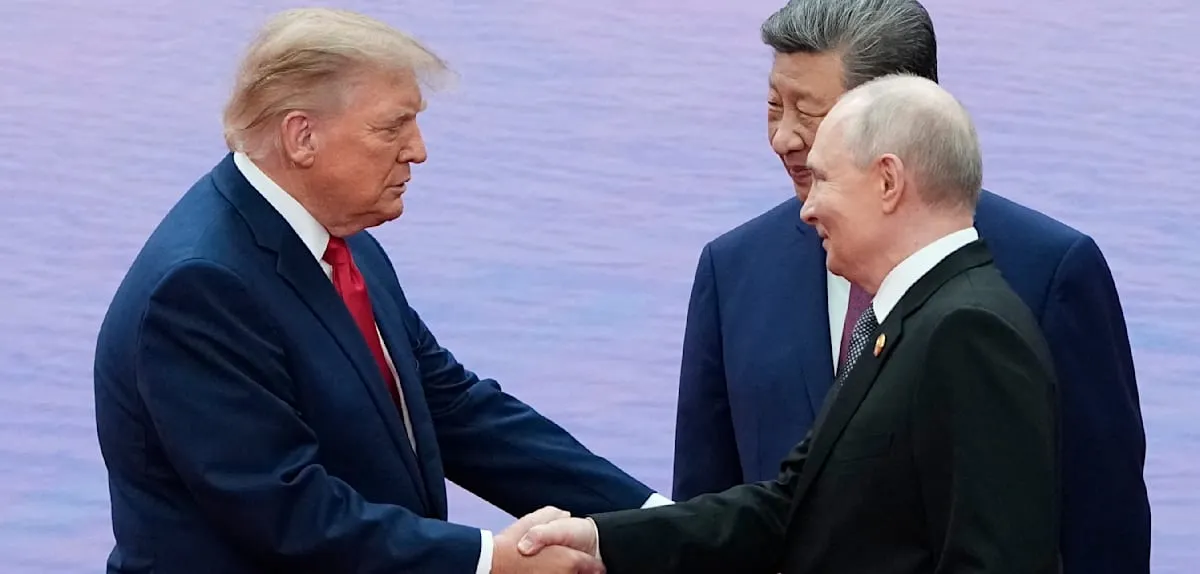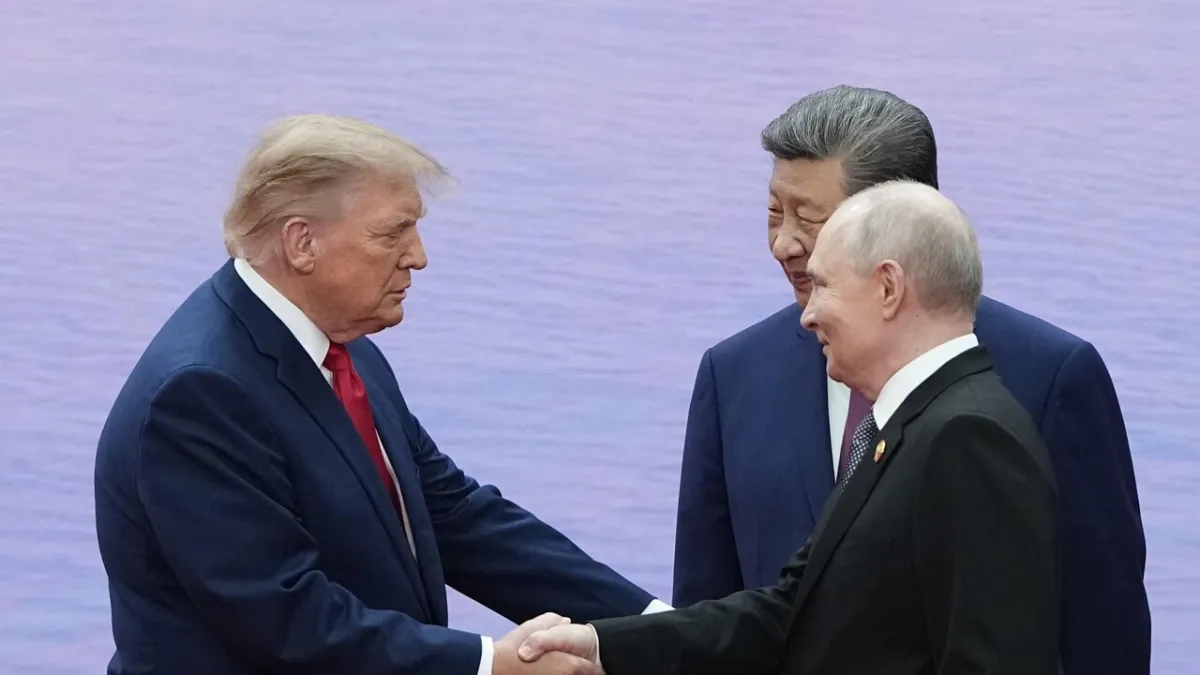
SHENZHEN – The world witnessed a significant diplomatic encounter when US President Donald Trump, Russian President Vladimir Putin, and Chinese President Xi Jinping interacted closely in Shenzhen recently. The moment of handshakes and warm greetings among the three superpower leaders immediately fueled speculation about the direction of global geopolitics, while simultaneously raising hopes in Kiev that this meeting would generate significant pressure on Moscow regarding the prolonged conflict.
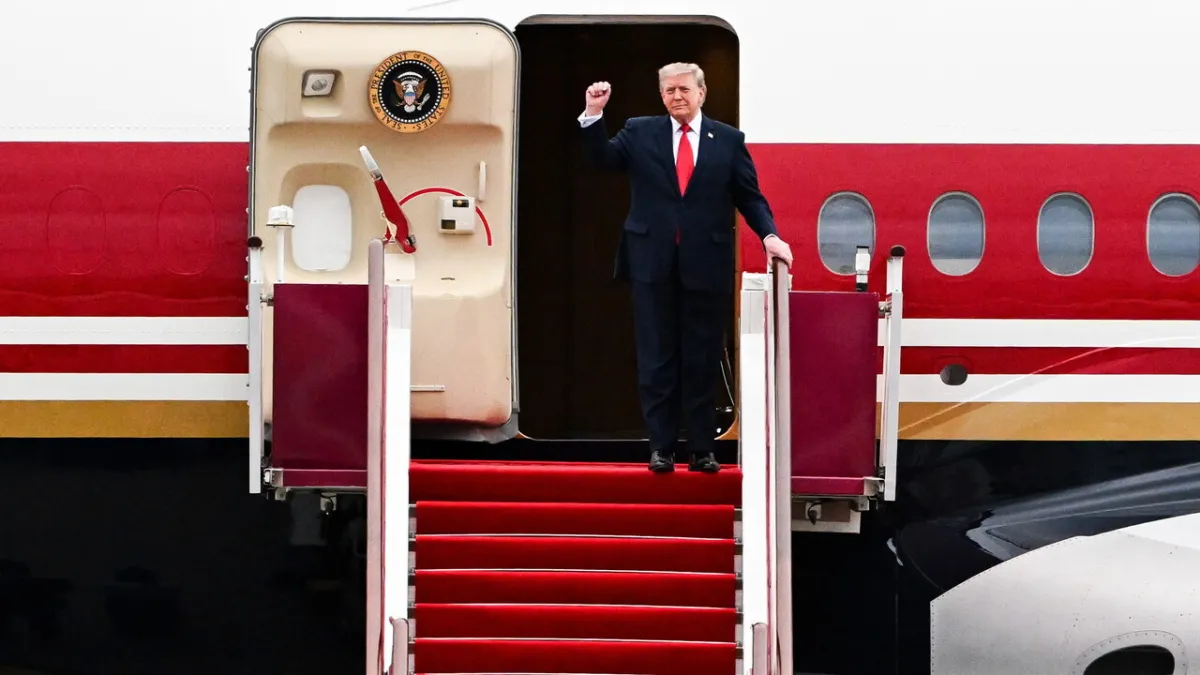
This rare meeting, held on the sidelines of a multilateral economic forum in 2026, presented an unusual spectacle. President Trump, who has resumed his role as the Head of State for the United States, was seen exchanging friendly greetings with President Putin and President Xi, indicating the possibility of new communication channels amid lingering international tensions.
Diplomatic sources, who requested anonymity, stated that the interaction was more than just protocol. There were indications of brief but substantial discussions on crucial regional and global issues, although the details remain confidential among the three parties.
From Kiev, the response was swift. The Ukrainian government openly expressed its hope that the United States and China could use their influence to press President Putin. We very much hope that the United States and China will seize this moment to exert the necessary pressure on the tsar [Putin], said a spokesperson for the Ukrainian Ministry of Foreign Affairs, referring to Ukraines demands for Russia to cease its aggression.
Kievs hopes reflect the crucial role Beijing and Washington play in navigating global crises. China, as a continuously growing economic and political power, is increasingly seen as having a central position in balancing world power dynamics. This aligns with global discussions concerning Chinas threat at the heart of the global automotive industry, which has been previously highlighted.
This tripartite summit serves as an important signal that world leaders are still seeking diplomatic avenues amidst a challenging political landscape. President Trumps presence on the international stage, after returning to the White House, adds a new dimension to efforts for conflict resolution and regional stabilization.
However, skepticism persists. Some international political analysts argue that this brief interaction may not be enough to drastically alter Russias stance. They emphasize the need for concrete steps and more in-depth diplomatic coordination to achieve meaningful breakthroughs.
A handshake is important as a symbol, but the substance lies in what happens behind closed doors, as well as a real commitment to peaceful solutions, said Professor Dr. Arifin Suryadi, an international relations expert from Universitas Nasional.
Chinas involvement in mediating the Russia-Ukraine conflict has always been a point of interest. Although Beijing officially maintains a neutral stance, its significant economic influence over Moscow is believed to be an effective leverage if China decides to act more assertively.
Meanwhile, the United States position under President Trumps leadership will be a determining factor. Since his return to power, Washingtons diplomatic approach has been closely observed by both allies and rivals.
The big question that remains is whether Kievs hopes will be fulfilled. Will this Shenzhen meeting become a catalyst for policy changes, or merely a symbol of camaraderie among leaders with differing strategic interests?
The follow-up to the interactions in Shenzhen will be closely monitored by the international community, especially by countries directly involved in conflicts or affected by geopolitical instability.
Editorial Insight: The meeting of Presidents Trump, Putin, and Xi in Shenzhen indicates the complexity of modern diplomacy. While the interaction offers a glimmer of hope for Kiev, it is realistic to acknowledge that major policy changes require consensus and sustained pressure beyond formal greetings. The main focus now is to observe any concrete steps that may follow from Washington and Beijing, and their impact on the dynamics of the conflict in Eastern Europe.