 Chandra Wijayanto
ROME – The world once again observes Fibonacci Day on November 23, 2026, a global celebration dedicated to commemorating the monumental contributions of the medieval mathematician, Leonardo Pisano, better known as Fibonacci. This observance highlights the close ties between the unique number sequence he discovered and the inherent beauty and order in the universe and various aspects of life.
Leonardo Pisano, born in Pisa, Italy, around 1175, was one of the most influential mathematicians in history. Through his renowned work, Liber Abaci (Book of Calculation), published in 1202, Fibonacci introduced the Hindu-Arabic numeral system to the Western world, a revolution that replaced the cumbersome and limited Roman numeral system.
However, his greatest legacy lies in the discovery of the number sequence now known as the Fibonacci sequence. This sequence begins with 0 and 1, with each subsequent number being the sum of the two preceding ones (0, 1, 1, 2, 3, 5, 8, 13, 21, 34, and so on). Seemingly simple, this sequence holds the key to fundamental patterns in nature.
The fascinating phenomenon of the Fibonacci sequence is its inextricable link to the Golden Ratio (Phi), whose value approximates 1.618. If a number in the sequence is divided by its preceding number, the result approaches the Golden Ratio as the numbers in the sequence grow larger. This ratio is often considered key to aesthetic beauty and ideal proportions.
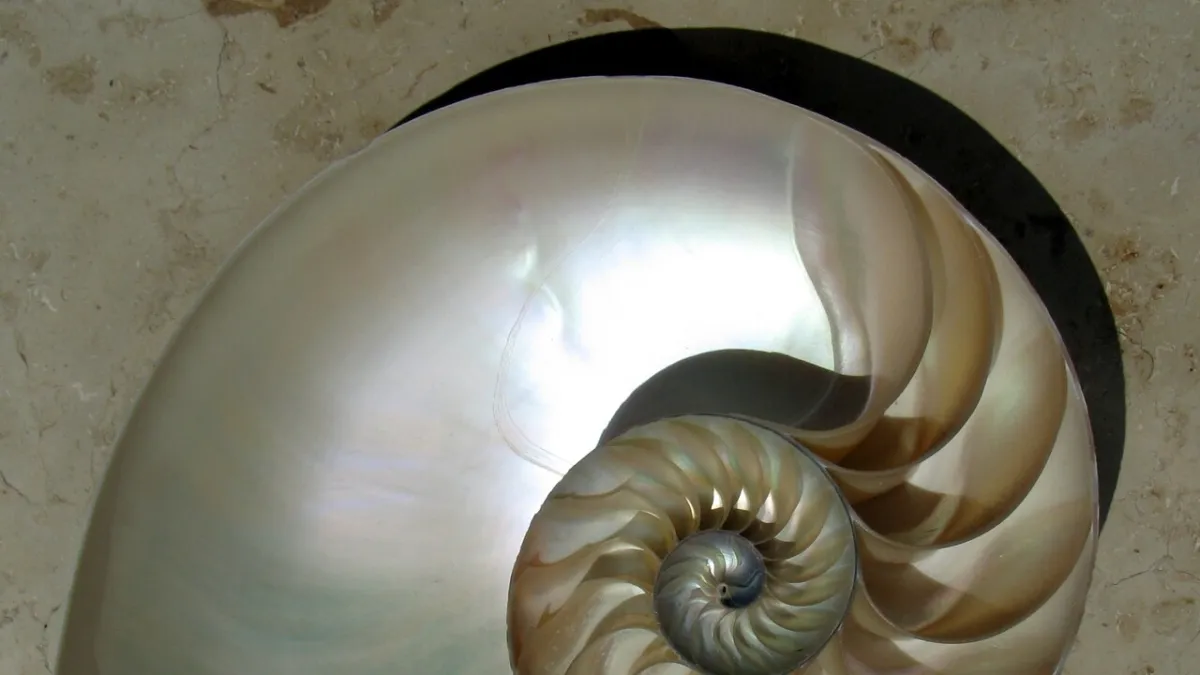
The magical order of the Fibonacci sequence and the Golden Ratio can be found abundantly in nature. The spiral patterns in sunflower seeds, the arrangement of scales on pinecones, the branching of trees, and even the shape of a nautilus shell, all astonishingly follow this sequence. Even the formation of spiral galaxies demonstrates Fibonacci proportions.
Beyond nature, the influence of the Fibonacci sequence extends into art, architecture, and music. Many artists and architects from ancient to modern times, whether consciously or unconsciously, have used the proportions of the Golden Ratio in their works to create harmonious and visually pleasing compositions. Examples include the design of the Parthenon in Greece and Leonardo da Vinci's painting, the Mona Lisa.
In the modern era, Fibonacci principles are also applied in various practical fields. Financial analysts use Fibonacci retracement to predict stock market movements, while computer scientists employ them in algorithms and data structures. Even music composers sometimes utilize this sequence to create complex rhythms and harmonies.
Fibonacci Day on November 23rd is not merely a moment to appreciate the genius of a mathematician but also a reminder of the hidden beauty and order behind numbers. It encourages us to view the world through a more mathematical lens, discovering patterns that holistically connect science, art, and nature.
Leonardo Pisano's legacy, the Fibonacci, goes far beyond a mere number sequence. He showed us that mathematics is not just abstract calculation but a universal language capable of explaining and celebrating the harmony of the cosmos, inspiring generations to continue exploring the mysteries and wonders of the world around us.
Editorial Insight: This 2026 observance of Fibonacci Day reinforces the narrative about the importance of numerical literacy and the appreciation for fundamental science. Amidst the deluge of information and technology, an understanding of fundamental patterns like the Fibonacci sequence can serve as a bridge to comprehending the world's complexities, from natural ecosystems to economic structures. This celebration is a golden opportunity to inspire younger generations not only to consume technology but also to understand the scientific foundations that shape it, fostering innovation based on a deep comprehension of the universe. This spirit aligns with global efforts to strengthen STEM education and create a more critical and knowledge-based society.